This book was sent to me by Matt Schoeneberger, who co-authored it with Jeff Thiboutot. Both have master's degrees in exercise science and health promotion. S.P.E.E.D. stands for Sleep, Psychology, Exercise, Environment and Diet. The authors have attempted to create a concise, comprehensive weight loss strategy based on what they feel is the most compelling scientific evidence available. It's subtitled "The Only Weight Loss Book Worth Reading". Despite the subtitle that's impossible to live up to, it was an interesting and well-researched book. It was a very fast read at 205 large-print pages including 32 pages of appendices and index.
I really appreciate the abundant in-text references the authors provided. I have a hard time taking a health and nutrition book seriously that doesn't provide any basis to evaluate its statements. There are already way too many people flapping their lips out there, without providing any outside support for their statements, for me to tolerate that sort of thing. Even well-referenced books can be a pain if the references aren't in the text itself. Schoeneberger and Thiboutot provided appropriate, accessible references for nearly every major statement in the book.
Chapter one, "What is a Healthy Weight", discusses the evidence for an association between body weight and health. They note that both underweight and obesity are associated with poor health outcomes, whereas moderate overweight isn't. While I agree, I continue to maintain that being fairly lean and appropriately muscled (which doesn't necessarily mean muscular) is probably optimal. The reason that people with a body mass index (BMI) considered to be "ideal" aren't healthier on average than people who are moderately overweight may have to do with the fact that many people with an "ideal" BMI are skinny-fat, i.e. have low muscle mass and too much abdominal fat.
Chapter 2, "Sleep", discusses the importance of sleep in weight regulation and overall health. They reference some good studies and I think they make a compelling case that it's important. Chapter 3, "Psychology", details psychological strategies to motivate and plan for effective weight loss.
Chapter 4, "Exercise", provides an exercise plan for weight loss. The main message: do it! I think they give a fair overview of the different categories of exercise and their relative merits, including high-intensity intermittent training (HIIT). However, the exercise regimen they suggest is intense and will probably lead to overtraining in many people. They recommend resistance training major, multi-joint exercises, 1-3 sets to muscular failure 2-4 days a week. I've been at the higher end of that recommendation and it made my joints hurt, plus I was weaker than when I strength trained less frequently. I think the lower end of their recommendation, 1 set of each exercise to failure twice a week, is more than sufficient to meet the goal of maximizing improvements in body composition in most people. My current routine is one brief strength training session and one sprint session per week (in addition to my leisurely cycle commute), which works well for me on a cost-benefit level. However, I was stronger when I was strength training twice a week and never going to muscular failure (a la Pavel Tsatsouline).
Chapter 5, "Environment", is an interesting discussion of different factors that promote excessive calorie intake, such as the setting of the meal, the company or lack thereof, and food presentation. While they support their statements very well with evidence from scientific studies, I do have a lingering doubt about these types of studies: as far as I know, they're all based on short-term interventions. Science would be a lot easier if short-term always translated to long term, but unfortunately that's not the case. For example, studies lasting one or two weeks show that low glycemic index foods cause a reduction in calorie intake and greater feelings of fullness. However, this effect disappears in the long term, and numerous controlled trials show that low glycemic index diets have no effect on food intake, body weight or insulin sensitivity in the long term. I reviewed those studies here.
The body has homeostatic mechanisms (homeostatic = maintains the status quo) that regulate long-term energy balance. Whether short-term changes in calorie intake based on environmental cues would translate into sustained changes that would have a significant impact on body fat, I don't know. For example, if you eat a meal with your extended family at a restaurant that serves massive portions, you might eat twice as much as you would by yourself in your own home. But the question is, will your body factor that huge meal into your subsequent calorie intake and energy expenditure over the following days? The answer is clearly yes, but the degree of compensation is unclear. Since I'm not aware of any trials indicating that changing meal context can actually lead to long-term weight loss, I can't put much faith in this strategy (if you know otherwise, please link to the study in the comments).
Chapter 6, "Diet", is a very brief discussion of what to eat for weight loss. They basically recommend a low-calorie, low-carb diet focused on whole, natural foods. I think low-carbohydrate diets can be useful for some overweight people trying to lose weight, if for no other reason than the fact that they make it easier to control appetite. In addition, a subset of people respond very well to carbohydrate restriction in terms of body composition, health and well-being. The authors emphasize nutrient density, but don't really explain how to achieve it. It would have been nice to see a discussion of a few topics such as organ meats, leafy greens, dairy quality (pastured vs. conventional) and vitamin D. These may not help you lose weight, but they will help keep you healthy, particularly on a calorie-restricted diet. The authors also recommend a few energy bars, powders and supplements that I don't support. They state that they have no financial connection to the manufacturers of the products they recommend.
I'm wary of their recommendation to deliberately restrict calorie intake. Although it will clearly cause fat loss if you restrict calories enough, it's been shown to be ineffective for sustainable, long-term fat loss over and over again. The only exception is the rare person with an iron will who is able to withstand misery indefinitely. I'm going to keep an open mind on this question though. There may be a place for deliberate calorie restriction in the right context. But at this point I'm going to require some pretty solid evidence that it's effective, sustainable, and doesn't have unacceptable side effects.
The book contains a nice bonus, an appendix titled "What is Quality Evidence"? It's a brief discussion of common logical pitfalls when evaluating evidence, and I think many people could benefit from reading it.
Overall, S.P.E.E.D. was a worthwhile read, definitely superior to 95% of fat loss books. With some caveats mentioned above, I think it could be a useful resource for someone interested in fat loss.
Monday, March 1, 2010
Adiponectin, inflammation, diabetes, and heart disease
Humans, like many animals, evolved to be episodic eaters and spend most of their time fasting. Body fat is the main store of energy in the human body. Excess dietary carbohydrates and fat are stored as body fat, in specialized cells known as adipocytes. Excess dietary protein is not normally stored as body fat.
Adipocytes can be seen as being part of a very important and distributed endocrine organ, being responsible for the release of many different hormones into the bloodstream. One of these hormones is adiponectin. Other important hormones secreted by body fat tissue are leptin and tumor necrosis factor-alpha.
Among hormones, adiponectin is particularly interesting because it is negatively correlated with body fat mass. That is, unlike other hormones such as leptin and tumor necrosis factor-alpha, a decrease in body fat mass (a well known health marker) is associated with an increase in adiponectin. This has led some researchers to speculate that adiponectin is a causative factor that promotes health, in addition to being a health marker.
Jung and colleagues (2008; full reference at the end of this post) studied 78 obese individuals (41 females) who participated in an exercise program during 12 weeks. The exercise program involved mostly low intensity aerobic activities, such as brisk walking. The individuals also took an appetite suppressant, with the goal of reducing their calorie intake by about 500 kcal per day.
The table below (click on it to enlarge) shows various measurements for the participants before and after the 12-week intervention.
Adipocytes can be seen as being part of a very important and distributed endocrine organ, being responsible for the release of many different hormones into the bloodstream. One of these hormones is adiponectin. Other important hormones secreted by body fat tissue are leptin and tumor necrosis factor-alpha.
Among hormones, adiponectin is particularly interesting because it is negatively correlated with body fat mass. That is, unlike other hormones such as leptin and tumor necrosis factor-alpha, a decrease in body fat mass (a well known health marker) is associated with an increase in adiponectin. This has led some researchers to speculate that adiponectin is a causative factor that promotes health, in addition to being a health marker.
Jung and colleagues (2008; full reference at the end of this post) studied 78 obese individuals (41 females) who participated in an exercise program during 12 weeks. The exercise program involved mostly low intensity aerobic activities, such as brisk walking. The individuals also took an appetite suppressant, with the goal of reducing their calorie intake by about 500 kcal per day.
The table below (click on it to enlarge) shows various measurements for the participants before and after the 12-week intervention.

From the table above we can say that there were significant reductions in weight, body mass index (BMI), waist and hip circumference, waist-to-hip ratio (WHR), total body fat, and total fasting cholesterol and triglycerides. However, the participants were still obese at the end of the intervention, with an average body fat percentage of 35.5.
The table below shows the concentrations of various hormones secreted by body fat tissue, as well as other types of tissue, before and after the 12-week intervention. These hormones are all believed to be health indicators and/or health causes.
The table below shows the concentrations of various hormones secreted by body fat tissue, as well as other types of tissue, before and after the 12-week intervention. These hormones are all believed to be health indicators and/or health causes.

We see from the table above that the hormonal changes were all significant (all at the P < .001 level except one, at the P < .05 level), and all indicative of health improvements. The serum concentrations of all hormones decreased, with two exceptions – adiponectin and interleukin-10, which increased. Interleukin-10 is an anti-inflammatory hormone produced by white blood cells. The most significant increase of the two was by far in adiponectin (P = .001, versus P = .041 for interleukin-10).
One of the most promising effects of adiponectin seems to be an increase in insulin sensitivity. This effect appears to be unrelated to any effects on insulin secretion. That is, adiponectin seems to act directly on various cells, including muscle cells, increasing their ability to clear glucose from the blood. This effect seems to be one of the underlying, and previously unknown, reasons why loss of body fat improves health in those who suffer from diabetes type 2.
Increased serum adiponectin has been found to be significantly associated with: decreased body fat and particularly visceral fat, decreased risk of developing diabetes type 2, decreased blood pressure, and decreased fasting triglycerides.
Adiponectin appears to also have anti-inflammatory and athero-protective properties.
On average, women have higher levels of serum adiponectin than men.
According to Giannessi and colleagues (2007) administration of adiponectin in mice has shown positive results. Since research on adiponectin is new, it will probably be some time until related drugs are developed. Giannessi and colleagues also note that fish oil and vanadium salts may increase the synthesis and release of adiponectin.
So far it seems that the most effective way of increasing adiponectin levels is weight loss, particularly through body fat loss. Even as new drugs are developed, this will likely remain the most natural and safe way of increasing adiponectin levels.
All of this helps in the identification of missing links between body fat loss and health improvement. It seems that losing body fat has an effect similar to that of supplementation; it increases the blood concentration of a health-promoting substance - adiponectin!
References:
Giannessi, D., Maltinti, M., & Del Ry, S. (2007). Adiponectin circulating levels: A new emerging biomarker of cardiovascular risk. Pharmacological Research, 56(6), 459-467.
Gil-Campos, M., Cañete, R., & Gil, A. (2004). Adiponectin, the missing link in insulin resistance and obesity. Clinical Nutrition, 23(5), 963-974.
Jung, S.H. et al. (2008). Effect of weight loss on some serum cytokines in human obesity: increase in IL-10 after weight loss. The Journal of Nutritional Biochemistry, 19(6), 371-375.
One of the most promising effects of adiponectin seems to be an increase in insulin sensitivity. This effect appears to be unrelated to any effects on insulin secretion. That is, adiponectin seems to act directly on various cells, including muscle cells, increasing their ability to clear glucose from the blood. This effect seems to be one of the underlying, and previously unknown, reasons why loss of body fat improves health in those who suffer from diabetes type 2.
Increased serum adiponectin has been found to be significantly associated with: decreased body fat and particularly visceral fat, decreased risk of developing diabetes type 2, decreased blood pressure, and decreased fasting triglycerides.
Adiponectin appears to also have anti-inflammatory and athero-protective properties.
On average, women have higher levels of serum adiponectin than men.
According to Giannessi and colleagues (2007) administration of adiponectin in mice has shown positive results. Since research on adiponectin is new, it will probably be some time until related drugs are developed. Giannessi and colleagues also note that fish oil and vanadium salts may increase the synthesis and release of adiponectin.
So far it seems that the most effective way of increasing adiponectin levels is weight loss, particularly through body fat loss. Even as new drugs are developed, this will likely remain the most natural and safe way of increasing adiponectin levels.
All of this helps in the identification of missing links between body fat loss and health improvement. It seems that losing body fat has an effect similar to that of supplementation; it increases the blood concentration of a health-promoting substance - adiponectin!
References:
Giannessi, D., Maltinti, M., & Del Ry, S. (2007). Adiponectin circulating levels: A new emerging biomarker of cardiovascular risk. Pharmacological Research, 56(6), 459-467.
Gil-Campos, M., Cañete, R., & Gil, A. (2004). Adiponectin, the missing link in insulin resistance and obesity. Clinical Nutrition, 23(5), 963-974.
Jung, S.H. et al. (2008). Effect of weight loss on some serum cytokines in human obesity: increase in IL-10 after weight loss. The Journal of Nutritional Biochemistry, 19(6), 371-375.

Sunday, February 28, 2010
Body fat and disease: How much body fat can I lose in one day?
Body fat is not an inert deposit of energy. It can be seen as a distributed endocrine organ. Body fat cells, or adipocytes, secrete a number of different hormones into the bloodstream. Major hormones secreted by adipose tissue are adiponectin and leptin.
Estrogen is also secreted by body fat, which is one of the reasons why obesity is associated with infertility. (Yes, abnormally high levels of estrogen can reduce fertility in both men and women.) Moreover, body fat secretes tumor necrosis factor-alpha, a hormone that is associated with generalized inflammation and a number of diseases, including cancer, when in excess.
The reduction in circulating tumor necrosis factor-alpha and other pro-inflammatory hormones as one loses weight is one reason why non-obese people usually experience fewer illness symptoms than those who are obese in any given year, other things being equal. For example, the non-obese will have fewer illness episodes that require full rest during the flu season. In those who are obese, the inflammatory response accompanying an illness (which is necessary for recovery) will often be exaggerated.
The exaggerated inflammatory response to illness often seen in the obese is one indication that obesity in an unnatural state for humans. It is reasonable to assume that it was non-adaptive for our Paleolithic ancestors to be unable to perform daily activities because of an illness. The adaptive response would be physical discomfort, but not to the extent that one would require full rest for a few days to fully recover.
Inflammation markers such as C-reactive protein are positively correlated with body fat. As body fat increases, so does inflammation throughout the body. Lipid metabolism is negatively affected by excessive body fat, and so is glucose metabolism. Obesity is associated with leptin and insulin resistance, which are precursors of diabetes type 2.
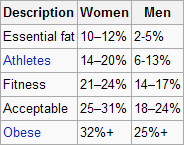
Some body fat is necessary for survival; that is normally called essential body fat. The table below (from Wikipedia) shows various levels of body fat, including essential levels. Also shown are body fat levels found in athletes, as well as fit, “not so fit” (indicated as "Acceptable"), and obese individuals. Women normally have higher healthy levels of body fat than men.
If one is obese, losing body fat becomes a very high priority for health reasons.
There are many ways in which body fat can be measured.
When one loses body fat through fasting, the number of adipocytes is not actually reduced. It is the amount of fat stored in adipocytes that is reduced.
How much body fat can a person lose in one day?
Let us consider a man, John, whose weight is 170 lbs (77 kg), and whose body fat percentage is 30 percent. John carries around 51 lbs (23 kg) of body fat. Standing up is, for John, a form of resistance exercise. So is climbing stairs.
During a 24-hour fast, John’s basal metabolic rate is estimated at about 2,550 kcal/day. This is the number of calories John would spend doing nothing the whole day. It can vary a lot for different individuals; here it is calculated as 15 times John’s weight in lbs.
The 2,550 kcal/day is likely an overestimation for John, because the body adjusts its metabolic rate downwards during a fast, leading to fewer calories being burned.
Typically women have lower basal metabolic rates than men of equal weight.
For the sake of discussion, we expect each gram of John’s body fat to contribute about 8 kcals of energy, assuming a rate of conversion of body fat to calories of about 90 percent.
Thus during a 24-hour fast John burns about 318 g of fat, or about 0.7 lbs. In reality, the actual amount may be lower (e.g., 0.35 lbs), because of the body's own down-regulation of its basal metabolic rate during a fast. This down-regulation varies widely across different individuals, and is generally small.
Many people think that this is not much for the effort. The reality is that body fat loss is a long term game, and cannot be achieved through fasting alone; this is a discussion for another post.
It is worth noting that intermittent fasting (e.g., one 24-hour fast per week) has many other health benefits, even if no overall calorie restriction occurs. That is, intermittent fasting is associated with health benefits even if one fasts every other day, and eats twice one's normal intake on the non-fasting days.
Some of the calories being burned during John's 24-hour fast will be from glucose, mostly from John’s glycogen reserves in the liver if he is at rest. Muscle glycogen stores, which store more glucose substrate (i.e., material for production of glucose) than liver glycogen, are mobilized primarily through anaerobic exercise.
Very few muscle-derived calories end up being used through the protein and glycogen breakdown pathways in a 24-hour fast. John’s liver glycogen reserves, plus the body’s own self-regulation, will largely spare muscle tissue.
The idea that one has to eat every few hours to avoid losing muscle tissue is complete nonsense. Muscle buildup and loss happen all the time through amino acid turnover.
Net muscle gain occurs when the balance is tipped in favor of buildup, to which resistance exercise and the right hormonal balance (including elevated levels of insulin) contribute.
One of the best ways to lose muscle tissue is lack of use. If John's arm were immobilized in a cast, he would lose muscle tissue in that arm even if he ate every 30 minutes.
Longer fasts (e.g., lasting multiple days, with only water being consumed) will invariably lead to some (possibly significant) muscle breakdown, as muscle is the main store of glucose-generating substrate in the human body.
In a 24-hour fast (a relatively short fast), the body will adjust its metabolism so that most of its energy needs are met by fat and related byproducts. This includes ketones, which are produced by the liver based on dietary and body fat.
How come some people can easily lose 2 or 3 pounds of weight in one day?
Well, it is not body fat that is being lost, or muscle. It is water, which may account for as much as 75 percent of one’s body weight.
References:
Elliott, W.H., & Elliott, D.C. (2009). Biochemistry and molecular biology. New York: NY: Oxford University Press.
Fleck, S.J., & Kraemer, W.J. (2004). Designing resistance training programs. Champaign, IL: Human Kinetics.
Large, V., Peroni, O., Letexier, D., Ray, H., & Beylot, M. (2004). Metabolism of lipids in human white adipocyte. Diabetes & Metabolism, 30(4), 294-309.
Estrogen is also secreted by body fat, which is one of the reasons why obesity is associated with infertility. (Yes, abnormally high levels of estrogen can reduce fertility in both men and women.) Moreover, body fat secretes tumor necrosis factor-alpha, a hormone that is associated with generalized inflammation and a number of diseases, including cancer, when in excess.
The reduction in circulating tumor necrosis factor-alpha and other pro-inflammatory hormones as one loses weight is one reason why non-obese people usually experience fewer illness symptoms than those who are obese in any given year, other things being equal. For example, the non-obese will have fewer illness episodes that require full rest during the flu season. In those who are obese, the inflammatory response accompanying an illness (which is necessary for recovery) will often be exaggerated.
The exaggerated inflammatory response to illness often seen in the obese is one indication that obesity in an unnatural state for humans. It is reasonable to assume that it was non-adaptive for our Paleolithic ancestors to be unable to perform daily activities because of an illness. The adaptive response would be physical discomfort, but not to the extent that one would require full rest for a few days to fully recover.
Inflammation markers such as C-reactive protein are positively correlated with body fat. As body fat increases, so does inflammation throughout the body. Lipid metabolism is negatively affected by excessive body fat, and so is glucose metabolism. Obesity is associated with leptin and insulin resistance, which are precursors of diabetes type 2.
Some body fat is necessary for survival; that is normally called essential body fat. The table below (from Wikipedia) shows various levels of body fat, including essential levels. Also shown are body fat levels found in athletes, as well as fit, “not so fit” (indicated as "Acceptable"), and obese individuals. Women normally have higher healthy levels of body fat than men.

If one is obese, losing body fat becomes a very high priority for health reasons.
There are many ways in which body fat can be measured.
When one loses body fat through fasting, the number of adipocytes is not actually reduced. It is the amount of fat stored in adipocytes that is reduced.
How much body fat can a person lose in one day?
Let us consider a man, John, whose weight is 170 lbs (77 kg), and whose body fat percentage is 30 percent. John carries around 51 lbs (23 kg) of body fat. Standing up is, for John, a form of resistance exercise. So is climbing stairs.
During a 24-hour fast, John’s basal metabolic rate is estimated at about 2,550 kcal/day. This is the number of calories John would spend doing nothing the whole day. It can vary a lot for different individuals; here it is calculated as 15 times John’s weight in lbs.
The 2,550 kcal/day is likely an overestimation for John, because the body adjusts its metabolic rate downwards during a fast, leading to fewer calories being burned.
Typically women have lower basal metabolic rates than men of equal weight.
For the sake of discussion, we expect each gram of John’s body fat to contribute about 8 kcals of energy, assuming a rate of conversion of body fat to calories of about 90 percent.
Thus during a 24-hour fast John burns about 318 g of fat, or about 0.7 lbs. In reality, the actual amount may be lower (e.g., 0.35 lbs), because of the body's own down-regulation of its basal metabolic rate during a fast. This down-regulation varies widely across different individuals, and is generally small.
Many people think that this is not much for the effort. The reality is that body fat loss is a long term game, and cannot be achieved through fasting alone; this is a discussion for another post.
It is worth noting that intermittent fasting (e.g., one 24-hour fast per week) has many other health benefits, even if no overall calorie restriction occurs. That is, intermittent fasting is associated with health benefits even if one fasts every other day, and eats twice one's normal intake on the non-fasting days.
Some of the calories being burned during John's 24-hour fast will be from glucose, mostly from John’s glycogen reserves in the liver if he is at rest. Muscle glycogen stores, which store more glucose substrate (i.e., material for production of glucose) than liver glycogen, are mobilized primarily through anaerobic exercise.
Very few muscle-derived calories end up being used through the protein and glycogen breakdown pathways in a 24-hour fast. John’s liver glycogen reserves, plus the body’s own self-regulation, will largely spare muscle tissue.
The idea that one has to eat every few hours to avoid losing muscle tissue is complete nonsense. Muscle buildup and loss happen all the time through amino acid turnover.
Net muscle gain occurs when the balance is tipped in favor of buildup, to which resistance exercise and the right hormonal balance (including elevated levels of insulin) contribute.
One of the best ways to lose muscle tissue is lack of use. If John's arm were immobilized in a cast, he would lose muscle tissue in that arm even if he ate every 30 minutes.
Longer fasts (e.g., lasting multiple days, with only water being consumed) will invariably lead to some (possibly significant) muscle breakdown, as muscle is the main store of glucose-generating substrate in the human body.
In a 24-hour fast (a relatively short fast), the body will adjust its metabolism so that most of its energy needs are met by fat and related byproducts. This includes ketones, which are produced by the liver based on dietary and body fat.
How come some people can easily lose 2 or 3 pounds of weight in one day?
Well, it is not body fat that is being lost, or muscle. It is water, which may account for as much as 75 percent of one’s body weight.
References:
Elliott, W.H., & Elliott, D.C. (2009). Biochemistry and molecular biology. New York: NY: Oxford University Press.
Fleck, S.J., & Kraemer, W.J. (2004). Designing resistance training programs. Champaign, IL: Human Kinetics.
Large, V., Peroni, O., Letexier, D., Ray, H., & Beylot, M. (2004). Metabolism of lipids in human white adipocyte. Diabetes & Metabolism, 30(4), 294-309.
Thursday, February 25, 2010
Corn Oil and Cancer?
The benefits of corn oil keep rolling in. In a new study by Stephen Freedland's group at Duke, feeding mice a diet rich in butter and lard didn't promote the growth of transplanted human prostate cancer cells any more than a low-fat diet (1).
Why do we care? Because other studies, including one from the same investigators, show that corn oil and other industrial seed oils strongly promote prostate cancer cell growth and increase mortality in similar models (2, 3).
From the discussion section:
* The average American eats 7-8% omega-6 by calories. This means it will be difficult to see a relationship between omega-6 intake and cancer (or heart disease, or most things) in observational studies in the US or other industrial nations, because we virtually all eat more than 4% of calories as omega-6. Until the 20th century, omega-6 intake was below 4%, and usually closer to 2%, in some traditional societies. That's where it remains in contemporary traditional societies unaffected by industrial food habits, such as Kitava.
Why do we care? Because other studies, including one from the same investigators, show that corn oil and other industrial seed oils strongly promote prostate cancer cell growth and increase mortality in similar models (2, 3).
From the discussion section:
Current results combined with our prior results suggest that lowering the fat content of a primarily saturated fat diet offers little survival benefit in an intact or castrated LAPC-4 xenograft model. In contrast to the findings when omega-6 fats are used, these results raise the possibility that fat type may be as important as fat amount or perhaps even more important.There's a large body of evidence implicating excess omega-6 fat in a number of cancer models. Reducing omega-6 to below 4% of calories has a dramatic effect on cancer incidence and progression*. In fact, there have even been several experiments showing that butter and other animal fats promote cancer growth to a lesser degree than margarine and omega-6-rich seed oils. I discussed that here.
* The average American eats 7-8% omega-6 by calories. This means it will be difficult to see a relationship between omega-6 intake and cancer (or heart disease, or most things) in observational studies in the US or other industrial nations, because we virtually all eat more than 4% of calories as omega-6. Until the 20th century, omega-6 intake was below 4%, and usually closer to 2%, in some traditional societies. That's where it remains in contemporary traditional societies unaffected by industrial food habits, such as Kitava.
Monday, February 22, 2010
Magnesium and Insulin Sensitivity
From a paper based on US NHANES nutrition and health survey data (1):
Magnesium status is associated with insulin sensitivity (2, 3), and a low magnesium intake predicts the development of type II diabetes in most studies (4, 5) but not all (6). Magnesium supplements largely prevent diabetes in a rat model* (7). Interestingly, excess blood glucose and insulin themselves seem to reduce magnesium status, possibly creating a vicious cycle.
In a 1993 trial, a low-magnesium diet reduced insulin sensitivity in healthy volunteers by 25% in just four weeks (8). It also increased urinary thromboxane concentration, a potential concern for cardiovascular health**.
At least three trials have shown that magnesium supplementation increases insulin sensitivity in insulin-resistant diabetics and non-diabetics (9, 10, 11). In some cases, the results were remarkable. In type II diabetics, 16 weeks of magnesium supplementation improved fasting glucose, calculated insulin sensitivity and HbA1c*** (12). HbA1c dropped by 22 percent.
In insulin resistant volunteers with low blood magnesium, magnesium supplementation for four months reduced estimated insulin resistance by 43 percent and decreased fasting insulin by 32 percent (13). This suggests to me that magnesium deficiency was probably one of the main reasons they were insulin resistant in the first place. But the study had another very interesting finding: magnesium improved the subjects' blood lipid profile remarkably. Total cholesterol decreased, LDL decreased, HDL increased and triglycerides decreased by a whopping 39 percent. The same thing had been reported in the medical literature decades earlier when doctors used magnesium injections to treat heart disease, and also in animals treated with magnesium. Magnesium supplementation also suppresses atherosclerosis (thickening and hardening of the arteries) in animal models, a fact that I may discuss in more detail at some point (14, 15).
In the previous study, participants were given 2.5 g magnesium chloride (MgCl2) per day. That's a bit more than the USDA recommended daily allowance (MgCl2 is mostly chloride by weight), in addition to what they were already getting from their diet. Most of a person's magnesium is in their bones, so correcting a deficiency by eating a nutritious diet may take a while.
Speaking of nutritious diets, how does one get magnesium? Good sources include halibut, leafy greens, chocolate and nuts. Bone broths may also be a source of magnesium. Whole grains and beans are also fairly good sources, while refined grains lack most of the magnesium in the whole grain. Organic foods, particularly artisanally produced foods from a farmer's market, are richer in magnesium because they grow on better soil and often use older varieties that are more nutritious.
The problem with seeds such as grains, beans and nuts is that they also contain phytic acid which prevents the absorption of magnesium and other minerals (16). Healthy non-industrial societies that relied on grains took great care in their preparation: they soaked them, often fermented them, and also frequently removed a portion of the bran before cooking (17). These steps all served to reduce the level of phytic acid and other anti-nutrients. I've posted a method for effectively reducing the amount of phytic acid in brown rice (18). Beans should ideally be soaked for 24 hours before cooking, preferably in warm water.
Industrial agriculture has systematically depleted our soil of many minerals, due to high-yield crop varieties and the fact that synthetic fertilizers only replace a few minerals. The mineral content of foods in the US, including magnesium, has dropped sharply in the last 50 years. The reason we need to use fertilizers in the first place is that we've broken the natural nutrient cycle in which minerals always return to the soil in the same place they were removed. In 21st century America, minerals are removed from the soil, pass through our toilets, and end up in the landfill or in waste water. This will continue until we find an acceptable way to return human feces and urine to agricultural soil, as many cultures do to this day****.
I believe that an adequate magnesium intake is critical for proper insulin sensitivity and overall health.
* Zucker rats that lack leptin signaling
** Thromboxane A2 is an omega-6 derived eicosanoid that potently constricts blood vessels and promotes blood clotting. It's interesting that magnesium has such a strong effect on it. It indicates that fatty acid balance is not the only major influence on eicosanoid production.
*** Glycated hemoglobin. A measure of the average blood glucose level over the past few weeks.
**** Anyone interested in further reading on this should look up The Humanure Handbook
During 1999–2000, the diet of a large proportion of the U.S. population did not contain adequate magnesium... Furthermore, racial or ethnic differences in magnesium persist and may contribute to some health disparities.... Because magnesium intake is low among many people in the United States and inadequate magnesium status is associated with increased risk of acute and chronic conditions, an urgent need exists to perform a current survey to assess the physiologic status of magnesium in the U.S. population.Magnesium is an essential mineral that many people apparently don't get enough of. One of the many things it's necessary for in mammals is proper insulin sensitivity and glucose control. A loss of glucose control due to insulin resistance can eventually lead to diabetes and all its complications.
Magnesium status is associated with insulin sensitivity (2, 3), and a low magnesium intake predicts the development of type II diabetes in most studies (4, 5) but not all (6). Magnesium supplements largely prevent diabetes in a rat model* (7). Interestingly, excess blood glucose and insulin themselves seem to reduce magnesium status, possibly creating a vicious cycle.
In a 1993 trial, a low-magnesium diet reduced insulin sensitivity in healthy volunteers by 25% in just four weeks (8). It also increased urinary thromboxane concentration, a potential concern for cardiovascular health**.
At least three trials have shown that magnesium supplementation increases insulin sensitivity in insulin-resistant diabetics and non-diabetics (9, 10, 11). In some cases, the results were remarkable. In type II diabetics, 16 weeks of magnesium supplementation improved fasting glucose, calculated insulin sensitivity and HbA1c*** (12). HbA1c dropped by 22 percent.
In insulin resistant volunteers with low blood magnesium, magnesium supplementation for four months reduced estimated insulin resistance by 43 percent and decreased fasting insulin by 32 percent (13). This suggests to me that magnesium deficiency was probably one of the main reasons they were insulin resistant in the first place. But the study had another very interesting finding: magnesium improved the subjects' blood lipid profile remarkably. Total cholesterol decreased, LDL decreased, HDL increased and triglycerides decreased by a whopping 39 percent. The same thing had been reported in the medical literature decades earlier when doctors used magnesium injections to treat heart disease, and also in animals treated with magnesium. Magnesium supplementation also suppresses atherosclerosis (thickening and hardening of the arteries) in animal models, a fact that I may discuss in more detail at some point (14, 15).
In the previous study, participants were given 2.5 g magnesium chloride (MgCl2) per day. That's a bit more than the USDA recommended daily allowance (MgCl2 is mostly chloride by weight), in addition to what they were already getting from their diet. Most of a person's magnesium is in their bones, so correcting a deficiency by eating a nutritious diet may take a while.
Speaking of nutritious diets, how does one get magnesium? Good sources include halibut, leafy greens, chocolate and nuts. Bone broths may also be a source of magnesium. Whole grains and beans are also fairly good sources, while refined grains lack most of the magnesium in the whole grain. Organic foods, particularly artisanally produced foods from a farmer's market, are richer in magnesium because they grow on better soil and often use older varieties that are more nutritious.
The problem with seeds such as grains, beans and nuts is that they also contain phytic acid which prevents the absorption of magnesium and other minerals (16). Healthy non-industrial societies that relied on grains took great care in their preparation: they soaked them, often fermented them, and also frequently removed a portion of the bran before cooking (17). These steps all served to reduce the level of phytic acid and other anti-nutrients. I've posted a method for effectively reducing the amount of phytic acid in brown rice (18). Beans should ideally be soaked for 24 hours before cooking, preferably in warm water.
Industrial agriculture has systematically depleted our soil of many minerals, due to high-yield crop varieties and the fact that synthetic fertilizers only replace a few minerals. The mineral content of foods in the US, including magnesium, has dropped sharply in the last 50 years. The reason we need to use fertilizers in the first place is that we've broken the natural nutrient cycle in which minerals always return to the soil in the same place they were removed. In 21st century America, minerals are removed from the soil, pass through our toilets, and end up in the landfill or in waste water. This will continue until we find an acceptable way to return human feces and urine to agricultural soil, as many cultures do to this day****.
I believe that an adequate magnesium intake is critical for proper insulin sensitivity and overall health.
* Zucker rats that lack leptin signaling
** Thromboxane A2 is an omega-6 derived eicosanoid that potently constricts blood vessels and promotes blood clotting. It's interesting that magnesium has such a strong effect on it. It indicates that fatty acid balance is not the only major influence on eicosanoid production.
*** Glycated hemoglobin. A measure of the average blood glucose level over the past few weeks.
**** Anyone interested in further reading on this should look up The Humanure Handbook
Lindeberg on Obesity
I'm currently reading Dr. Staffan Lindeberg's magnum opus Food and Western Disease, recently published in English for the first time. Dr. Lindeberg is one of the world's leading experts on the health and diet of non-industrial cultures, particularly in Papua New Guinea. The book contains 2,034 references. It's also full of quotable statements. Here's what he has to say about obesity:
I'd recommend this book to anyone who has a scholarly interest in health and nutrition, and somewhat of a background in science and medicine. It's extremely well referenced, which makes it much more valuable.
Middle-age spread is a normal phenomenon - assuming you live in the West. Few people are able to maintain their [youthful] waistline after age 50. The usual explanation - too little exercise and too much food - does not fully take into account the situation among traditional populations. Such people are usually not as physically active as you may think, and they usually eat large quantities of food.The only obese Kitavans Dr. Lindeberg observed were two people who had spent several years off the island living a modern, urban lifestyle, and were back on Kitava for a visit.
Overweight has been extremely rare among hunter-gatherers and other traditional cultures [18 references]. This simple fact has been quickly apparent to all foreign visitors...
The Kitava study measured height, weight, waist circumference, subcutaneous fat thickness at the back of the upper arm (triceps skinfold) and upper arm circumference on 272 persons ages 4-86 years. Overweight and obesity were absent and average [body mass index] was low across all age groups. ...no one was larger around their waist than around their hips.
...The circumference of the upper arm [mostly indicating muscle mass] was only negligibly smaller on Kitava [compared with Sweden], which indicates that there was no malnutrition. It is obvious from our investigations that lack of food is an unknown concept, and that the surplus of fruits and vegetables regularly rots or is eaten by dogs.
The Population of Kitava occupies a unique position in the world in terms of the negligible effect that the Western lifestyle has had on the island.
I'd recommend this book to anyone who has a scholarly interest in health and nutrition, and somewhat of a background in science and medicine. It's extremely well referenced, which makes it much more valuable.
Saturday, February 20, 2010
What should be my HDL cholesterol?
HDL cholesterol levels are a rough measure of HDL particle quantity in the blood. They actually tell us next to nothing about HDL particle type, although HDL cholesterol increases are usually associated with increases in LDL particle size. This a good thing, since small-dense LDL particles are associated with increased cardiovascular disease.
Most blood lipid panels reviewed by family doctors with patients give information about HDL status through measures of HDL cholesterol, provided in one of the standard units (e.g., mg/dl).
Study after study shows that HDL cholesterol levels, although imprecise, are a much better predictor of cardiovascular disease than LDL or total cholesterol levels. How high should be one’s HDL cholesterol? The answer to this question is somewhat dependent on each individual’s health profile, but most data suggest that a level greater than 60 mg/dl (1.55 mmol/l) is close to optimal for most people.
The figure below (from Eckardstein, 2008; full reference at the end of this post) plots incidence of coronary events in men (on the vertical axis), over a period of 10 years, against HDL cholesterol levels (on the horizontal axis). Note: IFG = impaired fasting glucose. This relationship is similar for women, particularly post-menopausal women. Pre-menopausal women usually have higher HDL cholesterol levels than men, and a low incidence of coronary events.

From the figure above, one can say that a diabetic man with about 55 mg/dl of HDL cholesterol will have approximately the same chance, on average, of having a coronary event (a heart attack) as a man with no risk factors and about 20 mg/dl of HDL cholesterol. That chance will be about 7 percent. With 20 mg/dl of HDL cholesterol, the chance of a diabetic man having a coronary event would approach 50 percent.
We can also conclude from the figure above that a man with no risk factors will have a 5 percent chance of having a coronary event if his HDL cholesterol is about 25 mg/dl; and about 2 percent if his HDL cholesterol is greater than 60 mg/dl. This a 60 percent reduction in risk, a risk that was low to start with because of the absence of risk factors.
HDL cholesterol levels greater than 60 are associated with significantly reduced risks of coronary events, particularly for those with diabetes (the graph does not take diabetes type into consideration). Much higher levels of HDL cholesterol (beyond 60) do not seem to be associated with much lower risk of coronary events.
Conversely, a very low HDL cholesterol level (below 25) is a major risk factor when other risk factors are also present, particularly: diabetes, hypertension (high blood pressure), and familial hypercholesteromia (gene-induced very elevated LDL cholesterol).
It is not yet clear whether HDL cholesterol is a cause of reduced cardiovascular disease, or just a marker of other health factors that lead to reduced risk for cardiovascular disease. Much of the empirical evidence suggests a causal relationship, and if this is the case then it may be a good idea to try to increase HDL levels. Even if HDL cholesterol is just a marker, the same strategy that increases it may also have a positive impact on the real causative factor of which HDL cholesterol is a marker.
What can one do to increase his or her HDL cholesterol? One way is to replace refined carbs and sugars with saturated fat and cholesterol in one’s diet. (I know that this sounds counterintuitive, but seems to work.) Another is to increase one’s vitamin D status, through sun exposure or supplementation.
Other therapeutic interventions can also be used to increase HDL; some more natural than others. The figure below (also from Eckardstein, 2008) shows the maximum effects of several therapeutic interventions to increase HDL cholesterol.

Among the therapeutic interventions shown in the figure above, taking nicotinic acid (niacin) in pharmacological doses, of 1 to 3 g per day (higher dosages may be toxic), is by far the most effective way of increasing one’s HDL cholesterol. Only the niacin that causes flush is effective in this respect. No-flush niacin preparations may have some anti-inflammatory effects, but do not cause increases in HDL cholesterol.
Rimonabant, which is second to niacin in its effect on HDL cholesterol, is an appetite suppressor that has been associated with serious side effects and, to be best of my knowledge, has been largely banned from use in pharmaceutical drugs.
Third in terms of effectiveness, among the factors shown in the figure, is moderate alcohol consumption. Running about 19 miles per week (2.7 miles per day) and taking fibrates are tied in forth place.
Many people think that they are having a major allergic reaction, and have a panic attack, when they experience the niacin flush. This usually happens several minutes after taking niacin, and depends on the dose and whether niacin was consumed with food or not. It is not uncommon for one’s entire torso to turn hot red, as though the person had had major sunburn. This reaction is harmless, and usually disappears after several minutes.
One could say that, with niacin: no “pain” (i.e., flush), no gain.
Reference:
von Eckardstein, A. (2008). HDL – a difficult friend. Drug Discovery Today: Disease Mechanisms, 5(3), 315-324.
Most blood lipid panels reviewed by family doctors with patients give information about HDL status through measures of HDL cholesterol, provided in one of the standard units (e.g., mg/dl).
Study after study shows that HDL cholesterol levels, although imprecise, are a much better predictor of cardiovascular disease than LDL or total cholesterol levels. How high should be one’s HDL cholesterol? The answer to this question is somewhat dependent on each individual’s health profile, but most data suggest that a level greater than 60 mg/dl (1.55 mmol/l) is close to optimal for most people.
The figure below (from Eckardstein, 2008; full reference at the end of this post) plots incidence of coronary events in men (on the vertical axis), over a period of 10 years, against HDL cholesterol levels (on the horizontal axis). Note: IFG = impaired fasting glucose. This relationship is similar for women, particularly post-menopausal women. Pre-menopausal women usually have higher HDL cholesterol levels than men, and a low incidence of coronary events.

From the figure above, one can say that a diabetic man with about 55 mg/dl of HDL cholesterol will have approximately the same chance, on average, of having a coronary event (a heart attack) as a man with no risk factors and about 20 mg/dl of HDL cholesterol. That chance will be about 7 percent. With 20 mg/dl of HDL cholesterol, the chance of a diabetic man having a coronary event would approach 50 percent.
We can also conclude from the figure above that a man with no risk factors will have a 5 percent chance of having a coronary event if his HDL cholesterol is about 25 mg/dl; and about 2 percent if his HDL cholesterol is greater than 60 mg/dl. This a 60 percent reduction in risk, a risk that was low to start with because of the absence of risk factors.
HDL cholesterol levels greater than 60 are associated with significantly reduced risks of coronary events, particularly for those with diabetes (the graph does not take diabetes type into consideration). Much higher levels of HDL cholesterol (beyond 60) do not seem to be associated with much lower risk of coronary events.
Conversely, a very low HDL cholesterol level (below 25) is a major risk factor when other risk factors are also present, particularly: diabetes, hypertension (high blood pressure), and familial hypercholesteromia (gene-induced very elevated LDL cholesterol).
It is not yet clear whether HDL cholesterol is a cause of reduced cardiovascular disease, or just a marker of other health factors that lead to reduced risk for cardiovascular disease. Much of the empirical evidence suggests a causal relationship, and if this is the case then it may be a good idea to try to increase HDL levels. Even if HDL cholesterol is just a marker, the same strategy that increases it may also have a positive impact on the real causative factor of which HDL cholesterol is a marker.
What can one do to increase his or her HDL cholesterol? One way is to replace refined carbs and sugars with saturated fat and cholesterol in one’s diet. (I know that this sounds counterintuitive, but seems to work.) Another is to increase one’s vitamin D status, through sun exposure or supplementation.
Other therapeutic interventions can also be used to increase HDL; some more natural than others. The figure below (also from Eckardstein, 2008) shows the maximum effects of several therapeutic interventions to increase HDL cholesterol.

Among the therapeutic interventions shown in the figure above, taking nicotinic acid (niacin) in pharmacological doses, of 1 to 3 g per day (higher dosages may be toxic), is by far the most effective way of increasing one’s HDL cholesterol. Only the niacin that causes flush is effective in this respect. No-flush niacin preparations may have some anti-inflammatory effects, but do not cause increases in HDL cholesterol.
Rimonabant, which is second to niacin in its effect on HDL cholesterol, is an appetite suppressor that has been associated with serious side effects and, to be best of my knowledge, has been largely banned from use in pharmaceutical drugs.
Third in terms of effectiveness, among the factors shown in the figure, is moderate alcohol consumption. Running about 19 miles per week (2.7 miles per day) and taking fibrates are tied in forth place.
Many people think that they are having a major allergic reaction, and have a panic attack, when they experience the niacin flush. This usually happens several minutes after taking niacin, and depends on the dose and whether niacin was consumed with food or not. It is not uncommon for one’s entire torso to turn hot red, as though the person had had major sunburn. This reaction is harmless, and usually disappears after several minutes.
One could say that, with niacin: no “pain” (i.e., flush), no gain.
Reference:
von Eckardstein, A. (2008). HDL – a difficult friend. Drug Discovery Today: Disease Mechanisms, 5(3), 315-324.
Subscribe to:
Posts (Atom)