Showing posts with label fasting. Show all posts

Monday, September 3, 2012

Daniel Suelo, the man who quit money, seems remarkably healthy

Daniel James Shellabarger (better known as Daniel Suelo) is portrayed in the bestselling 2012 nonfiction book by Mark Sundeen titled “The Man Who Quit Money” ().

Apparently Suelo stopped using money in 2000, and lives in a cave near the city of Moab in Utah. His diet comprises primarily wild vegetables and fruits, insects, and road kill; as well as discarded or donated food he gets from others when he visits the city. The photo below is from a recent BBC documentary. An interesting 2006 YouTube clip on Suelo is titled “Moneyless in Moab” ().


Suelo is listed as having been born in 1961 (), and the photo above appears to have been taken in 2012. If these dates are correct, he is 51 in the photo above. I cannot help but think that he looks remarkably healthy. The 40-50 age period is one that often sets the stage for many diseases of civilization in urban societies.

Suelo’s decision seems like a radical one, at least to me. There are always complex motivations behind radical decisions. In the case of Suelo, some of these motivations are captured in the comment below, which is part of a review of the book “The Man Who Quit Money” posted on Amazon.com by a reader.

[…] a picture of Suelo not as an untarnished hero, but a man who has wrestled with heartbreak, depression, disillusionment with his family's faith, and his repugnance to working for the pure sake of making money and buying things. Whether or not you are inspired to follow Suelo's example, this book will make you think.

Many people have been inspired by Suelo’s story, to some extent because they see that adopting a radical form of “simple living” () may not only be possible but also liberating. Obviously Suelo’s lifestyle, as it is now, would not be possible without the help of others who adopt a more “traditional” lifestyle. Below is a critical review by a reader of the book, posted on Amazon.com, which harshly reflects this perspective.

Any infantile mentality charmed by this inane story should simply generalize the message - visualize a world in which all of us live like the parasitic protagonist. How fortunate for Suelo that there are still people who engage in productive work and indirectly and unknowingly keep the human sponge alive […] Suelo never quit money he simply quit contributing anything and continues to survive simply as a parasite.

Still, Suelo’s story is interesting, including from a human health perspective. An article on Details.com by Christopher Ketcham provides a glimpse at what a day in Suelo’s life looks like (). It seems that on most days he has one main meal per day.

It is hard to get a sense of the nutrient composition of his diet. It looks like his diet is limited in but not devoid of industrial foods, and one in which food consumption is sporadic, opportunistic, and driven primarily by hunger and availability – not by stress or set meal times, for example.

He probably walks a lot; his cave is one hour away from Moab by foot, and it looks like he goes to Moab often. Apparently he almost never gets sick.

Suelo also writes a blog (), which has many followers, and also maintains other websites, from the Public Library in Moab. His first blog post has over 1,000 comments under it ().

Tuesday, July 31, 2012

The 14-percent advantage of eating little and then a lot: Putting it in practice

In my previous post I argued that the human body may react to “eating big” as it would to overfeeding, increasing energy expenditure by a certain amount. That increase seems to lead to a reduction in the caloric value of the meals during overfeeding; a reduction that seems to gravitate around 14 percent of the overfed amount.

And what is the overfed amount? Let us assume that your daily calorie intake to maintain your current body weight is 2,000 calories. However, one day you consume 1,000 calories, and the next 3,000 – adding up to 4,000 calories in 2 days. This amounts to 2,000 calories per day on average, the weight maintenance amount; but the extra 1,000 on the second day is perceived by your body as overfeeding. So 140 calories are “lost”.

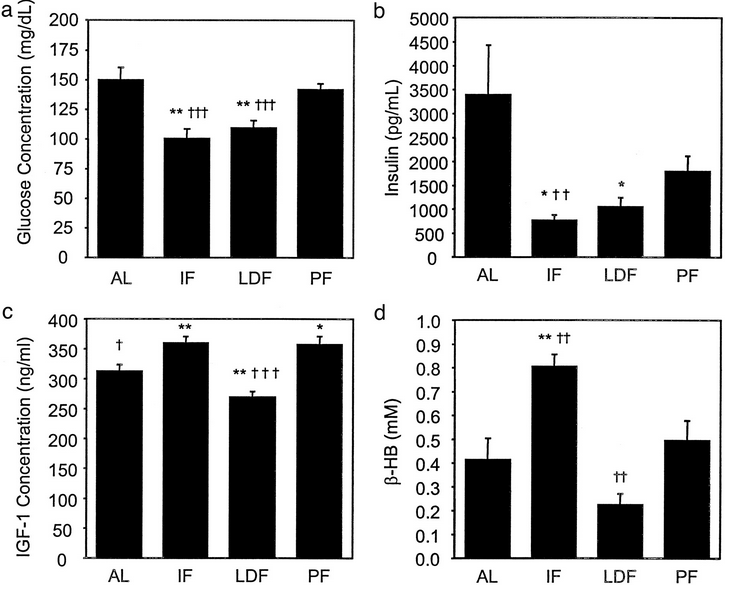
The mechanisms by which this could happen are not entirely clear. Some studies contain clues; one example is the 2002 study conducted with mice by Anson and colleagues (), from which the graphs below were taken.


In the graphs above AL refers to ad libitum feeding, LDF to limited daily feeding (40 percent less than AL), IF to intermittent (alternate-day) fasting, and PF to pair-fed mice that were provided daily with a food allotment equal to the average daily intake of mice in the IF group. PF was added a control condition; in practice, the 2-day food consumption was about the same in AL, IF and PF.

After a 20-week period, intermittent fasting was associated with the lowest blood glucose and insulin concentrations (graphs a and b), and the highest concentrations of insulin growth factor 1 and ketones (graphs c and d). These seem to be fairly positive outcomes. In humans, they would normally be associated with metabolic improvements and body fat loss.

Let us go back to the 14 percent advantage of eating little and then a lot; a pattern of eating that can be implemented though intermittent fasting, as well as other approaches.

So, as we have seen in the previous post (), it seems that if you consume the same number of calories, but you do that while alternating between underfeeding and overfeeding, you actually “absorb” 14 percent fewer calories – with that percentage applied to the extra calorie intake above the amount needed for weight maintenance.

And here is a critical point, which I already hinted at in the previous post (): energy expenditure is not significantly reduced by underfeeding, as long as it is short-term underfeeding – e.g., about 24 h or less. So you don’t “gain back” the calories due to a possible reduction in energy expenditure in the (relatively short) underfeeding period.

What do 140 calories mean in terms of fat loss? Just divide that amount by 9 to get an estimate; about 15 g of fat lost. This is about 1 lb per month, and 12 lbs per year. Does one lose muscle due to this, in addition to body fat? A period of underfeeding of about 24 h or less should not be enough to lead to loss of muscle, as long as one doesn’t do glycogen-depleting exercise during that period ().

Sounds good? It actually gets better. Underfeeding tends to increase the body’s receptivity to both micronutrients and macronutrients. This applies to protein, carbohydrates, vitamins etc. For example, the activity of liver and muscle glycogen synthase is significantly increased by underfeeding (the scientific term is “phosphorylation”), particularly carbohydrate underfeeding, effectively raising the insulin sensitivity of those tissues.

The same happens, in general terms, with a host of other tissues and nutrients; often mediated by enzymes. This means that after a short period of underfeeding your body is primed to absorb micronutrients and macronutrients more effectively, even as it uses up some extra calories – leading to a 14 percent increase in energy expenditure.

There are many ways in which this can be achieved. Intermittent fasting is one of them; with 16-h to 24-h fasts, for example. Intermittent calorie restriction is another; e.g., with a 1/3 and 2/3 calorie consumption pattern across two-day periods. Yet another is intermittent carbohydrate restriction, with other macronutrients kept more or less constant.

If the same amount of food is consumed, there is evidence suggesting that such practices would lead to body weight preservation with improved body composition – same body weight, but reduced fat mass. This is what the study by Anson and colleagues, mentioned earlier, suggested ().

A 2005 study by Heilbronn and colleagues on alternate day fasting by humans suggested a small decrease in body weight (); although the loss was clearly mostly of fat mass. Interestingly, this study with nonobese humans suggested a massive decrease in fasting insulin, much like the mice study by Anson and colleagues.

Having said all of the above, there are several people who gain body fat by alternating between eating little and a lot. Why is that? The most likely reason is that when they eat a lot their caloric intake exceeds the increased energy expenditure.

Monday, July 16, 2012

The 14-percent advantage of eating little and then a lot: Is it real?

When you look at the literature on overfeeding, you see a number over and over again – 14 percent. That is approximately the increase in energy expenditure you get when you overfeed people; that is, when you feed people more calories that they need to maintain their current weight.

This phenomenon is related to another interesting one: the nonlinear increase in body weight and fat mass following overfeeding after a period starvation, illustrated by the top graph below from an article by Kevin Hall (). The data for the squares on the top graph is from the Minnesota Starvation Experiment (). The graph at the bottom is based mostly on the results of a simulation, and doesn’t clearly reflect the phenomenon.


Due to the significant amount of weight lost in what is called above the semistarvation stage (SS), the controlled refeeding period (CR) actually involved significant overfeeding. Nevertheless, weight was not gained right away, due to a sharp increase in energy expenditure. That is illustrated by the U-curve shape of the weight gain in response to overfeeding. Initially the gain is minimal, increasing over time, and continuing through the ad libitum refeeding stage (ALR).

Interestingly, overfeeding leads to increased energy expenditure almost immediately after it starts happening. It seems that even one single unusually big meal will significantly increase energy expenditure. Also, the 14 percent is usually associated with meals with a balanced amount of macronutrients. That percentage seems to go down if the balance is significantly shifted toward dietary fat (), probably because the metabolic “cost” of converting dietary fat into body fat is low. In other words, large meals with a lot of fat in them tend to cause a reduced increase in energy expenditure – less than 14 percent. Shifting the balance to protein appears to have the opposite effect, increasing energy expenditure even more, probably because protein is the jack-of-all-trades among macronutrients ().

The calorie surplus used in experiments where the 14 percent increase in energy expenditure is observed is normally around 1,000 calories, but the percentage seems to hold steady when people are overfed to different degrees () (). Let us assume that one is overfed 1,000 calories. What happens? About 140 calories are “lost” due to overfeeding.

What does this have to do with eating little, and then a lot, in an alternate way? It allows for some reasonable speculation, based on a simple pattern: when you alternate between underfeeding and overfeeding, you reduce food consumption for short period of time (usually less than 24 h), and then eat big, because you are hungry.

It is reasonable to assume, based on the empirical evidence on what happens during overfeeding, that the body reacts to “eating big” as it would to overfeeding, increasing energy expenditure by a certain amount. That increase leads to a reduction in the caloric value of the meals during overfeeding; a reduction of about 14 percent of the overfed amount.

But the body does not seem to significantly decrease energy expenditure if one reduces food consumption for a short period of time, such as 24 h. So you have the potential here for some steady fat loss without a reduction in caloric intake. Keeping a calorie intake up above a certain point is more important than many people think, because a calorie intake that is too low may lead to nutrient deficiencies (). This is possibly one of the reasons why carrying a bit of extra weight is associated with increased longevity in relatively sedentary populations ().

Is this 14-percent effect real, or just another mirage? If yes, what does it possibly translate into in terms of fat loss? More on these issues is coming in the next post.

Monday, March 12, 2012

Gaining muscle and losing fat at the same time: A more customized approach based on strength training and calorie intake variation

In the two last posts I discussed the idea of gaining muscle and losing fat at the same time () (). This post outlines one approach to make that happen, based on my own experience and that of several HCE () users. This approach may well be the most natural from an evolutionary perspective.

But first let us address one important question: Why would anyone want to reach a certain body weight and keep it constant, resorting to the more difficult and slow strategy of “turning fat into muscle”, so to speak? One could simply keep on losing fat, without losing or gaining muscle, until he or she reaches a very low body fat percentage (e.g., a single-digit body fat percentage, for men). Then he or she could go up from there, slowly putting on muscle.

The reason why it is advisable to reach a certain body weight and keep it constant is that, below a certain weight, one is likely to run into nutrient deficiencies. Non-exercise energy expenditure is proportional to body weight. As you keep on losing body weight, calorie intake may become too low to allow you to have a nutrient intake that is the minimum for your body structure. Unfortunately eating highly nutritious vegetables or consuming copious amounts of vitamin and mineral supplements will not work very well, because the nutritional needs of your body include both micro- and macro-nutrients that need co-factors to be properly absorbed and/or metabolized. One example is dietary fat, which is necessary for the absorption of fat-soluble vitamins.

If you place yourself into a state of nutrient deficiency, your body will compensate by mounting a multipronged defense, resorting to psychological and physiological mechanisms. Your body will do that because it is hardwired for self-preservation; as noted below, being in a state of nutrient deficiency for too long is very dangerous for one's health. Most people cannot oppose this body reaction by willpower alone. That is where binge-eating often starts. This is one of the key reasons why looking for a common denominator of most diets leads to the conclusion that all succeed at first, and eventually fail ().

If you are one of the few who can oppose the body’s reaction, and maintain a very low calorie intake even in the face of nutrient deficiencies, chances are you will become much more vulnerable to diseases caused by pathogens. Individually you will be placing yourself in a state that is similar to that of populations that have faced famine in the past. Historically speaking, famines are associated with decreases in degenerative diseases, and increases in diseases caused by pathogens. Pandemics, like the Black Death (), have historically been preceded by periods of food scarcity.

The approach to gaining muscle and losing fat at the same time, outlined here, relies mainly on the following elements: (a) regularly conducting strength training; (b) varying calorie intake based on exercise; and (c) eating protein regularly. To that, I would add becoming more active, which does not necessarily mean exercising but does mean doing things that involve physical motion of some kind (e.g., walking, climbing stairs, moving things around), to the tune of 1 hour or more every day. These increase calorie expenditure, enabling a slightly higher calorie intake while maintaining the same weight, and thus more nutrients on a diet of unprocessed foods. In fact, even things like fidgeting count (). These activities should not cause muscle damage to the point of preventing recovery from strength training.

As far as strength training goes, the main idea, as discussed in the previous post, is to regularly hit the supercompensation window, with progressive overload, and maintain your current body weight. In fact, over time, as muscle gain progresses, you will probably want to increase your calorie intake to increase your body weight, but very slowly to keep any fat gain from happening. This way your body fat percentage will go down, even as your weight goes up slowly. The first element, regularly hitting the supercompensation window, was discussed in a previous post ().

Varying calorie intake based on exercise. Here one approach that seems to work well is to eat more in the hours after a strength training session, and less in the hours preceding the next strength training session, keeping the calorie intake at maintenance over a week. Individual customization here is very important. Many people will respond quite well to a calorie surplus window of 8 – 24 h after exercise, and a calorie deficit in the following 40 – 24 h. This assumes that strength training sessions take place every other day. The weekend break in routine is a good one, as well as other random variations (e.g., random fasts), as the body tends to adapt to anything over time ().

One example would be someone following a two-day cycle where on the first day he or she would do strength training, and eat the following to satisfaction: muscle meats, fatty seafood (e.g., salmon), cheese, eggs, fruits, and starchy tubers (e.g., sweet potato). On the second day, a rest day, the person would eat the following, to near satisfaction, limiting portions a bit to offset the calorie surplus of the previous day: organ meats (e.g., heart and liver), lean seafood (e.g., shrimp and mussels), and non-starchy nutritious vegetables (e.g., spinach and cabbage). This would lead to periodic glycogen depletion, and also to unsettling water-weight variations; these can softened a bit, if they are bothering, by adding a small amount of fruit and/or starchy foods on rest days.

Organ meats, lean seafood, and non-starchy nutritious vegetables are all low-calorie foods. So restricting calories with them is relatively easy, without the need to reduce the volume of food eaten that much. If maintenance is achieved at around 2,000 calories per day, a possible calorie intake pattern would be 3,000 calories on one day, mostly after strength training, and 1,000 calories the next. This of course would depend on a number of factors including body size and nonexercise thermogenesis. A few calories could be added or removed here and there to make up for a different calorie intake during the weekend.

Some people believe that, if you vary your calorie intake in this way, the calorie deficit period will lead to muscle loss. This is the rationale behind the multiple balanced meals a day approach; which also works, and is successfully used by many bodybuilders, such as Doug Miller () and Scooby (). However, it seems that the positive nitrogen balance stimulus caused by strength training leads to a variation in nitrogen balance that is nonlinear and also different from the stimulus to muscle gain. Being in positive or neutral nitrogen balance is not the same as gaining muscle mass, although the two should be very highly correlated. While the muscle gain window may close relatively quickly after the strength training session, the window in which nitrogen balance is positive or neutral may remain open for much longer, even in the face of a calorie deficit during part of it. This difference in nonlinear response is illustrated through the schematic graph below.


Eating protein regularly. Here what seems to be the most advisable approach is to eat protein throughout, in amounts that make you feel good. (Yes, you should rely on sense of well being as a measure as well.) There is no need for overconsumption of protein, as one does not need much to be in nitrogen balance when doing strength training. For someone weighing 200 lbs (91 kg) about 109 g/d of high-quality protein would be an overestimation () because strength training itself pushes one’s nitrogen balance into positive territory (). The amount of carbohydrate needed depends on the amount of glycogen depleted through exercise and the amount of protein consumed. The two chief sources for glycogen replenishment, in muscle and liver, are protein and carbohydrate – with the latter being much more efficient if you are not insulin resistant.

How much dietary protein can you store in muscle? About 15 g/d if you are a gifted bodybuilder (). Still, consumption of protein stimulates muscle growth through complex processes. And protein does not usually become fat if one is in calorie deficit, particularly if consumption of carbohydrates is limited ().

The above is probably much easier to understand than to implement in practice, because it requires a lot of customization. It seems natural because our Paleolithic ancestors probably consumed more calories after hunting-gathering activities (i.e., exercise), and fewer calories before those activities. Our body seems to respond quite well to alternate day calorie restriction (). Moreover, the break in routine every other day, and the delayed but certain satisfaction provided by the higher calorie intake on exercise days, can serve as powerful motivators.

The temptation to set rigid rules, or a generic formula, always exists. But each person is unique (). For some people, adopting various windows of fasting (usually in the 8 – 24 h range) seems to be a very good strategy to achieve calorie deficits while maintaining a positive or neutral nitrogen balance.

For others, fasting has the opposite effect, perhaps due to an abnormal increase in cortisol levels. This is particularly true for fasting windows of 12 – 24 h or more. If regularly fasting within this range stresses you out, as opposed to “liberating” you (), you may be in the category that does better with more frequently meals.

Monday, July 11, 2011

Fasting for 24 hours and ending up with a bigger waist!? This may be a sign that you are losing abdominal fat

This is such a common phenomenon that you’d expect to see it discussed more often – people fasting for a non-negligible number of hours and ending up with a bigger waist. However, it is very difficult to find anything published on it. (Lyle McDonald discussed a related phenomenon on this post on whooshes and squishy fat.) I am not talking about only a perceived bigger waist; I am talking about measurably bigger. This frequently happens with folks who were obese, lost a lot of body fat, and are trying to get rid of the stubborn lower abdominal fat.

(Source [ironically]: Gograins.com.au)

Fasting and ending up with a bigger waist; how is that possible?

Contrary to popular belief, this is very unlikely to be due to the body turning muscle protein into glucose, and then converting that glucose into fat for storage in fat cells around the waist. When you are fasting, one factor strongly opposes that transformation. The body is in net body fat release mode, due in part to low circulating insulin, and thus body fat cells are essentially rejecting glucose. Blood glucose levels are maintained, to feed the brain, but uptake by adipocytes via GLUT4 isn’t happening.

So where does the bigger waist come from?

When people fast they typically drink water, quite often lots of it. A reasonable explanation for the bigger waist is that body fat cells store water in place of fat, as fat becomes energy. Since water is denser than fat, the stronger gravitational pull will lead to a larger bulge around the lower abdominal area, increasing waist circumference at the point it is widest. The amount of fat mass, however, is going down due to fasting.

In the obese, body fat cells generally become insulin resistant, even though many people believe the opposite to be true. This leads to the creation of new body fat cells (hyperplasia) to store the extra fat. If body fat loss is maintained over time, I’d expect the body to get rid of those fat cells that were created through hyperplasia during the obese period. The literature, however, seems to suggest that the number of body fat cells is set before adulthood, and does not change afterwards. I am skeptical, as the body seems to be very good at  getting rid of cells and tissues that are not used.

The loss of those extra body fat cells may bring the number of adipocytes to pre-obesity levels, but for many people quite some time is needed for that to happen. Often in the order of months; maintaining reasonably low body fat levels.

So don’t despair if you end up with a bigger waist around noon after skipping breakfast, or before dinner after fasting the whole day. That may be a good sign; a sign that you are actually losing abdominal fat.

Monday, October 25, 2010

The amounts of water, carbohydrates, fat, and protein lost during a 30-day fast

When it comes to losing fat and maintaining muscle, at the same time, there are no shortcuts. The process generally has to be slow to be healthy. When one loses a lot of weight in a few days, most of what is being lost is water, followed by carbohydrates. (Carbohydrates are stored as liver and muscle glycogen.) Smaller amounts of fat and protein are also lost. The figure below, from Wilmore et al. (2007), shows the weights in grams of stored water, carbohydrates (glycogen), fat, and protein lost during a 30-day water fast.


On the first few days of the fast a massive amount of water is lost, even though drinking water is allowed in this type of fast. A significant amount of glycogen is lost as well. This is no surprise. About 2.6 g of water are lost for each 1 g of glycogen lost. That is, water is stored by the body proportionally to the amount of glycogen stored. People who do strength training on a regular basis tend to store more glycogen, particular in muscle tissue; this is a compensatory adaptation. Those folks also tend to store more water.

Not many people will try a 30-day fast. Still, the figure above has implications for almost everybody.

One implication is that if you use a bioimpedance scale to measure your body fat, you can bet that it will give you fairly misleading results if your glycogen stores are depleted. Your body fat percentage will be overestimated, because water and glycogen are lean body mass. This will happen with low carbohydrate dieters who regularly engage in intense physical exercise, aerobic or anaerobic. The physical exercise will deplete glycogen stores, which will typically not be fully replenished due to the low intake of carbohydrates.

Light endurance exercise (e.g., walking) is normally easier to maintain with a depleted “glycogen tank” than strength training, because light endurance exercise relies heavily on fat oxidation. It uses glycogen, but more slowly. Strength training, on the other hand, relies much more heavily on glycogen while it is being conducted (significant fat oxidation occurs after the exercise session), and is difficult to do effectively with a depleted “glycogen tank”.

Strength training practitioners often will feel fatigued, and will probably be unable to generate supercompensation, if their “glycogen tank” is constantly depleted. Still, compensatory adaptation can work its “magic” if one persists, and lead to long term adaptations that make athletes rely much more heavily on fat than the average person as a fuel for strength training and other types of anaerobic exercise. Some people seem to be naturally more likely to achieve this type of compensatory adaptation; others may never do so, no matter how hard they try.

Another implication is that you should not worry about short-term weight variations if your focus is on losing body fat. Losing stored water and glycogen may give you an illusion of body fat loss, but it will be only that – an illusion. You may recall this post, where body fat loss coupled with muscle gain led to some weight gain and yet to a much improved body composition. That is, the participants ended up leaner, even though they also weighed more.

The figure above also gives us some hints as to what happens with very low carbohydrate dieting (i.e., daily consumption of less than 20 grams of carbohydrates); at least at the beginning, before long term compensatory adaptation. This type of dieting mimics fasting as far as glycogen depletion is concerned, especially if protein intake is low, and has many positive short term health benefits. The depletion is not as quick as in a fast because a high fat and/or protein diet promotes higher rates of fat/protein oxidation and ketosis than fasting, which spare glycogen. (Yes, dietary fat spares glycogen. It also spares muscle tissue.) Still, the related loss of stored water is analogous to that of fasting, over a slightly longer period. The result is a marked weight loss at the beginning of the diet. This is an illusion as far as body fat loss is concerned.

Dietary protein cannot be used directly for glycogenesis; i.e., for replenishing glycogen stores. Dietary protein must first be used to generate glucose, through a process called gluconeogenesis. The glucose is then used for liver and muscle glycogenesis, among other things. This process is less efficient than glycogenesis based on carbohydrate sources (particularly carbohydrate sources that combine fructose and glucose), which is why for quite a few people (but not all) it is difficult to replenish glycogen stores and stimulate muscle growth on very low carbohydrate diets.

Glycogen depletion appears to be very healthy, but most of the empirical evidence seems to suggest that it is the depletion that creates a hormonal mix that is particularly health-promoting, not being permanently in the depleted state. In this sense, the extent of the glycogen depletion that is happening should be positively associated with the health benefits. And significant glycogen depletion can only happen if glycogen stores are at least half full to start with.

Reference

Wilmore, J.H., Costill, D.L., & Kenney, W.L. (2007). Physiology of sport and exercise. Champaign, IL: Human Kinetics.

Sunday, February 28, 2010

Body fat and disease: How much body fat can I lose in one day?

Body fat is not an inert deposit of energy. It can be seen as a distributed endocrine organ. Body fat cells, or adipocytes, secrete a number of different hormones into the bloodstream. Major hormones secreted by adipose tissue are adiponectin and leptin.

Estrogen is also secreted by body fat, which is one of the reasons why obesity is associated with infertility. (Yes, abnormally high levels of estrogen can reduce fertility in both men and women.) Moreover, body fat secretes tumor necrosis factor-alpha, a hormone that is associated with generalized inflammation and a number of diseases, including cancer, when in excess.

The reduction in circulating tumor necrosis factor-alpha and other pro-inflammatory hormones as one loses weight is one reason why non-obese people usually experience fewer illness symptoms than those who are obese in any given year, other things being equal. For example, the non-obese will have fewer illness episodes that require full rest during the flu season. In those who are obese, the inflammatory response accompanying an illness (which is necessary for recovery) will often be exaggerated.

The exaggerated inflammatory response to illness often seen in the obese is one indication that obesity in an unnatural state for humans. It is reasonable to assume that it was non-adaptive for our Paleolithic ancestors to be unable to perform daily activities because of an illness. The adaptive response would be physical discomfort, but not to the extent that one would require full rest for a few days to fully recover.

Inflammation markers such as C-reactive protein are positively correlated with body fat. As body fat increases, so does inflammation throughout the body. Lipid metabolism is negatively affected by excessive body fat, and so is glucose metabolism. Obesity is associated with leptin and insulin resistance, which are precursors of diabetes type 2.

Some body fat is necessary for survival; that is normally called essential body fat. The table below (from Wikipedia) shows various levels of body fat, including essential levels. Also shown are body fat levels found in athletes, as well as fit, “not so fit” (indicated as "Acceptable"), and obese individuals. Women normally have higher healthy levels of body fat than men.


If one is obese, losing body fat becomes a very high priority for health reasons.

There are many ways in which body fat can be measured.

When one loses body fat through fasting, the number of adipocytes is not actually reduced. It is the amount of fat stored in adipocytes that is reduced.

How much body fat can a person lose in one day?

Let us consider a man, John, whose weight is 170 lbs (77 kg), and whose body fat percentage is 30 percent. John carries around 51 lbs (23 kg) of body fat. Standing up is, for John, a form of resistance exercise. So is climbing stairs.

During a 24-hour fast, John’s basal metabolic rate is estimated at about 2,550 kcal/day. This is the number of calories John would spend doing nothing the whole day. It can vary a lot for different individuals; here it is calculated as 15 times John’s weight in lbs.

The 2,550 kcal/day is likely an overestimation for John, because the body adjusts its metabolic rate downwards during a fast, leading to fewer calories being burned.

Typically women have lower basal metabolic rates than men of equal weight.

For the sake of discussion, we expect each gram of John’s body fat to contribute about 8 kcals of energy, assuming a rate of conversion of body fat to calories of about 90 percent.

Thus during a 24-hour fast John burns about 318 g of fat, or about 0.7 lbs. In reality, the actual amount may be lower (e.g., 0.35 lbs), because of the body's own down-regulation of its basal metabolic rate during a fast. This down-regulation varies widely across different individuals, and is generally small.

Many people think that this is not much for the effort. The reality is that body fat loss is a long term game, and cannot be achieved through fasting alone; this is a discussion for another post.

It is worth noting that intermittent fasting (e.g., one 24-hour fast per week) has many other health benefits, even if no overall calorie restriction occurs. That is, intermittent fasting is associated with health benefits even if one fasts every other day, and eats twice one's normal intake on the non-fasting days.

Some of the calories being burned during John's 24-hour fast will be from glucose, mostly from John’s glycogen reserves in the liver if he is at rest. Muscle glycogen stores, which store more glucose substrate (i.e., material for production of glucose) than liver glycogen, are mobilized primarily through anaerobic exercise.

Very few muscle-derived calories end up being used through the protein and glycogen breakdown pathways in a 24-hour fast. John’s liver glycogen reserves, plus the body’s own self-regulation, will largely spare muscle tissue.

The idea that one has to eat every few hours to avoid losing muscle tissue is complete nonsense. Muscle buildup and loss happen all the time through amino acid turnover.

Net muscle gain occurs when the balance is tipped in favor of buildup, to which resistance exercise and the right hormonal balance (including elevated levels of insulin) contribute.

One of the best ways to lose muscle tissue is lack of use. If John's arm were immobilized in a cast, he would lose muscle tissue in that arm even if he ate every 30 minutes.

Longer fasts (e.g., lasting multiple days, with only water being consumed) will invariably lead to some (possibly significant) muscle breakdown, as muscle is the main store of glucose-generating substrate in the human body.

In a 24-hour fast (a relatively short fast), the body will adjust its metabolism so that most of its energy needs are met by fat and related byproducts. This includes ketones, which are produced by the liver based on dietary and body fat.

How come some people can easily lose 2 or 3 pounds of weight in one day?

Well, it is not body fat that is being lost, or muscle. It is water, which may account for as much as 75 percent of one’s body weight.

References:

Elliott, W.H., & Elliott, D.C. (2009). Biochemistry and molecular biology. New York: NY: Oxford University Press.

Fleck, S.J., & Kraemer, W.J. (2004). Designing resistance training programs. Champaign, IL: Human Kinetics.

Large, V., Peroni, O., Letexier, D., Ray, H., & Beylot, M. (2004). Metabolism of lipids in human white adipocyte. Diabetes & Metabolism, 30(4), 294-309.

Friday, January 8, 2010

Muscle loss during short-term fasting

This is an issue that often comes up in online health discussions, and was the topic of a conversation I had the other day with a friend about some of the benefits of intermittent fasting.

Can the benefits of intermittent fasting be achieved without muscle loss? The answer is “yes”, to the best of my knowledge.

Even if you are not interested in bulking up or becoming a bodybuilder, you probably want to keep the muscle tissue you have. As a norm, muscle takes a long time, and effort, to build. It is generally easier to lose muscle than it is to gain it. Fat, on the other hand, can be gained very easily.

Body fat percentage is positively correlated with measures of inflammation markers and the occurrence of various health problems. Since muscle tissue makes up lean body mass, which excludes fat, it is by definition negatively correlated with inflammation markers and health problems.

As muscle mass increases, so does health; as long as the increase in muscle mass is “natural” – i.e., not caused by things like steroids, for instance.

In short-term fasts (e.g., up to 24 h) one can indeed lose some muscle as the body produces glucose using muscle tissue through a process known as gluconeogenesis. In this sense, muscle is the body’s main reserve of glucose. Adipocytes are the body’s main reserves of fat.

Muscle loss is not pronounced in short-term fasts though. It occurs after the body’s glycogen reserves, particularly those in the liver, are significantly depleted. This often happens 8 to 12 hours into the fast, depending on how depleted the glycogen reserves are when one starts fasting.

When the body is running short on glycogen, it becomes increasingly reliant on fat as a source of energy, sparing muscle tissue. That is, it burns fat, often in the form of ketone bodies, which are byproducts of fat metabolism. This state is known as ketosis. There is evidence that ketosis is a more efficient state from a metabolic perspective (Taubes, 2007, provides a good summary), which may be why many people feel an increase in energy when they fast.

The brain also runs on fat (through ketone byproducts) while in ketosis, although it still needs some glucose to function properly. That is primarily where muscle tissue comes into the picture, to provide the glucose that the brain needs to function. While glucose can also be made from fat, more specifically a lipid component called glycerol, this usually happens only during very prolonged fasting and starvation.

You do not have to consume carbohydrates at all to make up for the glycogen depletion, after you break the fast. Dietary protein will do the job, as it is used in gluconeogenesis as well.

Dietary protein also leads to an insulin response, which is comparable to that elicited by glucose. The difference is that protein also leads to other hormonal responses that have a counterbalancing effect to insulin, by allowing for the body's use of fat as a source of energy. Insulin, by itself, promotes fat deposition and prevents fat release at the same time.

When practicing intermittent fasting, one can increase protein synthesis by doing resistance exercise (weight training, HIT), which tips the scale toward muscle growth, and away from muscle catabolism.

This may actually lead to significant muscle gain in the long term. Fasting itself promotes the secretion of hormones (e.g., growth hormone) that have anabolic effects.

The following sites focus on muscle gain through intermittent fasting; the bloggers are living proof that it works.


  http://leangains.com/

Muscle catabolism happens all the time, even in the absence of fasting. As with many tissues in the body (e.g., bones), muscle is continuously synthesized and degraded. Muscle tissue grows when that balance is tipped toward synthesis, and is lost otherwise.

Muscle will atrophy (i.e., be degraded) if not used, even if you are not fasting. In fact, you can eat a lot of protein and carbohydrates and still lose muscle. Just note what happens when an arm or a leg is immobilized in a cast for a long period of time.

Short-term fasting is healthy, probably because it happened frequently enough among our hominid ancestors to lead to selective pressures for metabolic and physiological solutions. Consequently, our body is designed to function well while fasting, and triggering those mechanisms correctly may promote overall health.

The relationship between fasting and health likely follows a nonlinear pattern, possibly an inverted U-curve pattern. It brings about benefits up until a point, after which some negative effects ensue.

Long-term fasting may cause severe heart problems, and eventually death, as the heart muscle is used by the body to produce glucose. Here the brain has precedence over the heart, so to speak.

Voluntary, and in some cases forced, short-term fasting was likely very common among our Stone Age ancestors; and consumption of large amounts of high glycemic index carbohydrates very uncommon (Boaz & Almquist, 2001).

References:

Boaz, N.T., & Almquist, A.J. (2001). Biological anthropology: A synthetic approach to human evolution. Upper Saddle River, NJ: Prentice Hall.

Taubes, G. (2007). Good calories, bad calories: Challenging the conventional wisdom on diet, weight control, and disease. New York, NY: Alfred A. Knopf.

Friday, January 1, 2010

Intermittent fasting and reduced inflammation

A recent post on the Primal Wisdom blog led me to do go back to some of the research on an approach to dieting that I tried myself, with some positive results. The approach is known as intermittent fasting (IF). I also found an excellent blog post by Dr. Michael Eades on IF (see here).

Typically IF involves fasting every other day. On the non-fasting days, food and water consumption is not restricted in any way. On fasting days, only water is consumed. Variations of this approach usually involve replacing water with juice, and having an eating window of only a few hours within longer periods – e.g., fasting 19 hours and then eating during a window of 5 hours, for each period of 24 hours.

IF is different from calorie restriction (CR), in that in the latter total daily calorie intake is restricted to a somewhat fixed amount, below one’s basal metabolic rate (the number of calories needed to maintain one’s current weight). In CR the calorie restriction is not normally achieved through fasting, but through careful portion size control and selection of foods based on calorie content. Having said that, some prominent CR practitioners also practice IF.

One interesting aspect of IF studies is that often they do not involve any calorie reduction in the participants' diet; that is, individuals consume the same amount of calories that they would if they were not fasting at all. In other words, they consume 2X outside their fasting window; where X would be their normal caloric consumption without fasting.

Yet, the benefits of IF are still achieved. For example, during Ramadan, the levels of inflammation markers and factors, such as C-reactive protein (CRP) and homocysteine, go down, and remain low for several weeks after IF is interrupted. These inflammation markers and factors are known to be strongly associated with heart disease.

In fact, animal studies suggest that virtually identical benefits can be obtained through IF in terms of increased lifespan and disease resistance, as those normally associated with CR. Again, this is somewhat surprising because often IF does not involve any reduction in calories consumed.

Fasting promotes increased levels of growth hormone in humans. A decline in growth hormone levels is associated with aging. Thus, increased circulating growth hormones may be one of the mechanisms by which IF may affect lifespan.

There have been some reports of IF being associated with negative effects on health, but I suspect that they are associated with gorging on refined carbohydrates and sugars during the eating window. Refined carbohydrates and sugars promote inflammation, and IF reduces inflammation. It is conceivable that a very high consumption of refined carbohydrates and sugars during the eating window may completely negate the benefits of IF, particularly if one is doing a half-hearted version of IF to start with.

A combination of IF and a diet low in refined carbohydrates and sugars probably makes sense in terms of our evolved physiology. Our Stone Age ancestors had to fast on a regular basis, based on the availability of food – there were no refrigerators or grocery stores during the vast majority of our evolutionary history as a species. When food was available, it was consumed to satiety. In other words, our Stone Age ancestors practiced IF, against their will. Because of that, this is the state in which our body evolved to operate optimally.

If you watch enough episodes of the TV show Survivorman, you will probably notice that it is very unlikely that our Stone Age ancestors had access to enough calories to survive on plant foods only, assuming that they faced problems similar to those in the show.

Our digestive tract has evolved over millions of years from a mostly vegetarian diet, practiced by our Australopithecine ancestors, to a primarily carnivorous diet, adopted by human ancestors as far back as Homo erectus, and probably Homo habilis. Given that, only the recent invention of refined carbohydrates and sugars has given us access to enough dense carbohydrate sources of calories.

So, a combination of IF and a diet low in (or devoid of) refined carbohydrates and sugars makes evolutionary sense, and is probably why so many people who adopt Paleolithic diets see so many improvements in health markers such as inflammation markers, blood pressure, and HDL cholesterol.