Recently, Chris Kresser published a series on dietary salt (sodium chloride) and health (1). One of the issues he covered is the effect of salt on blood pressure. Most studies have shown a relatively weak relationship between salt intake and blood pressure. My position overall is that we're currently eating a lot more salt than at almost any point in our evolutionary history as a species, so I tend to favor a moderately low salt intake. However, there may be more important factors than salt when it comes to blood pressure, at least in the short term.
Read more »
Showing posts with label hypertension. Show all posts
Showing posts with label hypertension. Show all posts
Monday, May 21, 2012
Wednesday, February 22, 2012
Is Sugar Fattening?

Read more »

Monday, March 21, 2011
Health markers varying inexplicably? Do some detective work with HCE
John was overweight, out of shape, and experiencing fatigue. What did he do? He removed foods rich in refined carbohydrates and sugars from his diet. He also ditched industrial seed oils and started exercising. He used HealthCorrelator for Excel (HCE) to keep track of several health-related numbers over time (see figure below).

Over the period of time covered in the dataset, health markers steadily improved. For example, John’s HDL cholesterol went from a little under 40 mg/dl to just under 70; see chart below, one of many generated by HCE.

However, John’s blood pressure varied strangely during that time, as you can see on the chart below showing the variation of systolic blood pressure (SBP) against time. What could have been the reason for that? Salt intake is an unlikely culprit, as we’ve seen before.

As it turns out, John knew that heart rate could influence blood pressure somewhat, and he also knew that his doctor’s office measured his heart rate regularly. So he got the data from his doctor's office. When he entered heart rate as a column into HCE, the reason for his blood pressure swings became clear, as you can see on the figure below.

On the left part of the figure above are the correlations between SBP and each of the other health-related variables John measured, which HCE lists in order of strength. Heart rate shows up at the top, with a high 0.946 correlation with SBP. On the right part of the figure is the chart of SBP against heart rate.
As you can see, John's heart rate, measured at the doctor's office, varied from 61 to 90 bpm. Given that, John decided to measure his resting heart rate. John’s resting heart rate, measured after waking up using a simple wrist watch, was 61 bpm.
Mystery solved! John’s blood pressure fluctuations were benign, and caused by fluctuations in heart rate.
If John's SBP had been greater than 140, which did not happen, this could be seen as an unusual example of irregular white coat hypertension.
If you are interested, this YouTube video clip discusses in more detail the case above, from HCE’s use perspective. It shows how the heart rate column was added to the dataset in HCE, how the software generated correlations and graphs, and how they were interpreted.
Reference
Kock, N. (2010). HealthCorrelator for Excel 1.0 User Manual. Laredo, Texas: ScriptWarp Systems.

Over the period of time covered in the dataset, health markers steadily improved. For example, John’s HDL cholesterol went from a little under 40 mg/dl to just under 70; see chart below, one of many generated by HCE.

However, John’s blood pressure varied strangely during that time, as you can see on the chart below showing the variation of systolic blood pressure (SBP) against time. What could have been the reason for that? Salt intake is an unlikely culprit, as we’ve seen before.

As it turns out, John knew that heart rate could influence blood pressure somewhat, and he also knew that his doctor’s office measured his heart rate regularly. So he got the data from his doctor's office. When he entered heart rate as a column into HCE, the reason for his blood pressure swings became clear, as you can see on the figure below.
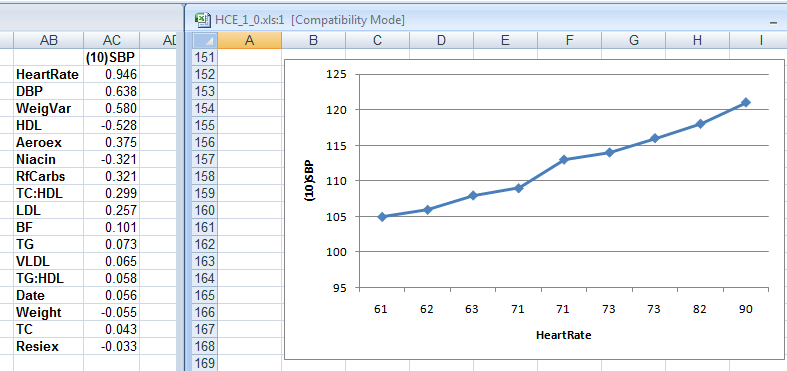
On the left part of the figure above are the correlations between SBP and each of the other health-related variables John measured, which HCE lists in order of strength. Heart rate shows up at the top, with a high 0.946 correlation with SBP. On the right part of the figure is the chart of SBP against heart rate.
As you can see, John's heart rate, measured at the doctor's office, varied from 61 to 90 bpm. Given that, John decided to measure his resting heart rate. John’s resting heart rate, measured after waking up using a simple wrist watch, was 61 bpm.
Mystery solved! John’s blood pressure fluctuations were benign, and caused by fluctuations in heart rate.
If John's SBP had been greater than 140, which did not happen, this could be seen as an unusual example of irregular white coat hypertension.
If you are interested, this YouTube video clip discusses in more detail the case above, from HCE’s use perspective. It shows how the heart rate column was added to the dataset in HCE, how the software generated correlations and graphs, and how they were interpreted.
Reference
Kock, N. (2010). HealthCorrelator for Excel 1.0 User Manual. Laredo, Texas: ScriptWarp Systems.
Sunday, February 13, 2011
Polyphenols, Hormesis and Disease: Part I
What are Polyphenols?
Polyphenols are a diverse class of molecules containing multiple phenol rings. They are synthesized in large amounts by plants, certain fungi and a few animals, and serve many purposes, including defense against predators/infections, defense against sunlight damage and chemical oxidation, and coloration. The color of many fruits and vegetables, such as blueberries, eggplants, red potatoes and apples comes from polyphenols. Some familiar classes of polyphenols in the diet-health literature are flavonoids, isoflavonoids, anthocyanidins, and lignins.
The Case Against Polyphenols
Many diet-health authorities seem pretty well convinced that dietary polyphenols are an important part of good health, due to their supposed antioxidant properties. In the past, I've been critical of the hypothesis. There are several reasons for it:
A Reappraisal
After reading more about polyphenols, and coming to understand that the prevailing hypothesis of why they work makes no sense, I decided that the whole thing is probably bunk: at best, specific polyphenols are protective in rodents at unnaturally high doses due to some drug-like effect. But-- I kept my finger on the pulse of the field just in case, and I began to notice that more sophisticated studies were emerging almost weekly that seemed to confirm that realistic amounts of certain polyphenol-rich foods (not just massive quantities of polyphenol extract) have protective effects against a variety of health problems. There are many such studies, and I won't attempt to review them comprehensively, but here are a few I've come across:
In the face of this accumulating evidence, I've had to reconsider my position on polyphenols. In the process, and through conversations with knowledgeable researchers in the polyphenol field, I encountered a different hypothesis that puts the puzzle pieces together nicely. I'll discuss that in the next post.
* Serum levels of polyphenols briefly enter the mid nM to low uM range, depending on the food (2). Compare that with the main serum antioxidants: ~200 uM for uric acid, ~100 uM for vitamin C, ~30 uM for vitamin E.
Polyphenols are a diverse class of molecules containing multiple phenol rings. They are synthesized in large amounts by plants, certain fungi and a few animals, and serve many purposes, including defense against predators/infections, defense against sunlight damage and chemical oxidation, and coloration. The color of many fruits and vegetables, such as blueberries, eggplants, red potatoes and apples comes from polyphenols. Some familiar classes of polyphenols in the diet-health literature are flavonoids, isoflavonoids, anthocyanidins, and lignins.
The Case Against Polyphenols
Many diet-health authorities seem pretty well convinced that dietary polyphenols are an important part of good health, due to their supposed antioxidant properties. In the past, I've been critical of the hypothesis. There are several reasons for it:
- Polyphenols are often, but not always, defensive compounds that interfere with digestive processes, which is why they often taste bitter and/or astringent. Plant-eating animals including humans have evolved defensive strategies against polyphenol-rich foods, such as polyphenol-binding proteins in saliva (1).
- Ingested polyphenols are poorly absorbed (2). The concentration in blood is low, and the concentration inside cells is probably considerably lower*. In contrast, essential antioxidant nutrients such as vitamins E and C are efficiently absorbed and retained rather than excluded from the circulation.
- Polyphenols that manage to cross the gut barrier are rapidly degraded by the liver, just like a variety of other foreign molecules, again suggesting that the body doesn't want them hanging around (2).
- The most visible hypothesis of how polyphenols influence health is the idea that they are antioxidants, protecting against the ravages of reactive oxygen species. While many polyphenols are effective antioxidants at high concentrations in a test tube, I don't find it very plausible that the low and transient blood concentration of polyphenols achieved by eating polyphenol-rich foods makes a meaningful contribution to that person's overall antioxidant status, when compared to the relatively high concentrations of other antioxidants in blood* (uric acid; vitamins C, E; ubiquinone) and particularly inside cells (SOD1/2, catalase, glutathione reductase, thioredoxin reductase, paraoxonase 1, etc.).
- There are a number of studies showing that the antioxidant capacity of the blood increases after eating polyphenol-rich foods. These are often confounded by the fact that fructose (in fruit and some vegetables) and caffeine (in tea and coffee) can increase the blood level of uric acid, the blood's main water-soluble antioxidant. Drinking sugar water has the same effect (2).
- Rodent studies showing that polyphenols improve health typically use massive doses that exceed what a person could consume eating food, and do not account for the possibility that the rodents may have been calorie restricted because their food tastes awful.
A Reappraisal
After reading more about polyphenols, and coming to understand that the prevailing hypothesis of why they work makes no sense, I decided that the whole thing is probably bunk: at best, specific polyphenols are protective in rodents at unnaturally high doses due to some drug-like effect. But-- I kept my finger on the pulse of the field just in case, and I began to notice that more sophisticated studies were emerging almost weekly that seemed to confirm that realistic amounts of certain polyphenol-rich foods (not just massive quantities of polyphenol extract) have protective effects against a variety of health problems. There are many such studies, and I won't attempt to review them comprehensively, but here are a few I've come across:
- Dr. David Grassi and colleagues showed that polyphenol-rich chocolate lowers blood pressure, improves insulin sensitivity and lowers LDL cholesterol in hypertensive and insulin resistant volunteers when compared with white chocolate (3). Although dark chocolate is also probably richer in magnesium, copper and other nutrients than white chocolate, the study is still intriguing.
- Dr. Christine Morand and colleagues showed that drinking orange juice every day lowers blood pressure and increases vascular reactivity in overweight volunteers, an effect that they were able to specifically attribute to the polyphenol hesperidin (4).
- Dr. F. Natella and colleagues showed that red wine prevents the increase in oxidized blood lipids (fats) that occurs after consuming a meal high in oxidized and potentially oxidizable fats (5).
- Several studies have shown that hibiscus tea lowers blood pressure in people with hypertension when consumed regularly (6, 7, 8). It also happens to be delicious.
- Dr. Arpita Basu and colleagues showed that blueberries lower blood pressure and oxidized LDL in men and women with metabolic syndrome (9).
- Animal studies have generally shown similar results. Dr. Xianli Wu and colleagues showed that whole blueberries potently inhibit atherosclerosis (hardening and thickening of the arteries that can lead to a heart attack) in a susceptible strain of mice (10). This effect was associated with a higher expression level of antioxidant enzymes in the vessel walls and other tissues.
In the face of this accumulating evidence, I've had to reconsider my position on polyphenols. In the process, and through conversations with knowledgeable researchers in the polyphenol field, I encountered a different hypothesis that puts the puzzle pieces together nicely. I'll discuss that in the next post.
* Serum levels of polyphenols briefly enter the mid nM to low uM range, depending on the food (2). Compare that with the main serum antioxidants: ~200 uM for uric acid, ~100 uM for vitamin C, ~30 uM for vitamin E.
Saturday, July 3, 2010
Tropical Plant Fats: Palm Oil
A Fatal Case of Nutritionism
The concept of 'nutritionism' was developed by Dr. Gyorgy Scrinis and popularized by the food writer Michael Pollan. It states that the health value of a food can be guessed by the sum of the nutrients it contains. Pollan argues, I think rightfully, that nutritionism is a reductionist philosophy that assumes we know more about food composition and the human body than we actually do. You can find varying degrees of this philosophy in most mainstream discussions of diet and health*.
One conspicuous way nutritionism manifests is in the idea that saturated fat is harmful. Any fat rich in saturated fatty acids is typically assumed to be unhealthy, regardless of its other constituents. There is also apparently no need to directly test that assumption, or even to look through the literature to see if the assumption has already been tested. In this manner, 'saturated' tropical plant fats such as palm oil and coconut oil have been labeled unhealthy, despite essentially no direct evidence that they're harmful. As we'll see, there is actually quite a bit of evidence, both indirect and direct, that their unrefined forms are not harmful and perhaps even beneficial.
Palm Oil and Heart Disease
Long-time readers may recall a post I wrote a while back titled Ischemic Heart Attacks: Disease of Civilization (1). I described a study from 1964 in which investigators looked for signs of heart attacks in thousands of consecutive autopsies in the US and Africa, among other places. They found virtually none in hearts from Nigeria and Uganda (3 non-fatal among more than 4,500 hearts), while Americans of the same age had very high rates (up to 1/3 of hearts).
What do they eat in Nigeria? Typical Nigerian food involves home-processed grains, starchy root vegetables, beans, fruit, vegetables, peanuts, red palm oil, and a bit of dairy, fish and meat**. The oil palm Elaeis guineensis originated in West Africa and remains one of the main dietary fats throughout the region.
To extract the oil, palm fruit are steamed, and the oily flesh is removed and pressed. It's similar to olive oil in that it is extracted gently from an oil-rich fruit, rather than harshly from an oil-poor seed (e.g., corn or soy oil). The oil that results is deep red and is perhaps the most nutrient-rich fat on the planet. The red color comes from carotenes, but red palm oil also contains a large amount of vitamin E (mostly tocotrienols), vitamin K1, coenzyme Q10 and assorted other fat-soluble constituents. This adds up to a very high concentration of fat-soluble antioxidants, which are needed to protect the fat from rancidity in hot and sunny West Africa. Some of these make it into the body when it's ingested, where they appear to protect the body's own fats from oxidation.
Mainstream nutrition authorities state that palm oil should be avoided due to the fact that it's approximately half saturated. This is actually one of the main reasons palm oil was replaced by hydrogenated seed oils in the processed food industry. Saturated fat raises blood cholesterol, which increases the risk of heart disease. Doesn't it? Let's see what the studies have to say.
Most of the studies were done using refined palm oil, unfortunately. Besides only being relevant to processed foods, this method also introduces a new variable because palm oil can be refined and oxidized to varying degrees. However, a few studies were done with red palm oil, and one even compared it to refined palm oil. Dr. Suzanna Scholtz and colleagues put 59 volunteers on diets predominating in sunflower oil, refined palm oil or red palm oil for 4 weeks. LDL cholesterol was not different between the sunflower oil and red palm oil groups, however the red palm oil group saw a significant increase in HDL. LDL and HDL both increased in the refined palm oil group relative to the sunflower oil group (2).
Although the evidence is conflicting, most studies have not been able to replicate the finding that refined palm oil increases LDL relative to less saturated oils (3, 4). This is consistent with studies in a variety of species showing that saturated fat generally doesn't raise LDL compared to monounsaturated fat in the long term, unless a large amount of purified cholesterol is added to the diet (5).
Investigators have also explored the ability of palm oil to promote atherosclerosis, or hardening and thickening of the arteries, in animals. Not only does palm oil not promote atherosclerosis relative to monounsaturated fats (e.g., olive oil), but in its unrefined state it actually protects against atherosclerosis (6, 7). A study in humans hinted at a possible explanation: compared to a monounsaturated oil***, palm oil greatly reduced oxidized LDL (8). As a matter of fact, I've never seen a dietary intervention reduce oxLDL to that degree (69%). oxLDL is a major risk factor for cardiovascular disease, and a much better predictor of risk than the typically measured LDL cholesterol (9). The paper didn't state whether or not the palm oil was refined. I suspect it was lightly refined, but still rich in vitamin E and CoQ10.
As I discussed in my recent interview with Jimmy Moore, atherosclerosis is only one factor in heart attack risk (10). Several other factors are also major determinants of risk: clotting tendency, plaque stability, and susceptibility to arrhythmia. Another factor that I haven't discussed is how resistant the heart muscle is to hypoxia, or loss of oxygen. If the coronary arteries are temporarily blocked-- a frequent occurrence in modern people-- the heart muscle can be damaged. Dietary factors determine the degree of damage that results. For example, in rodents, nitrites derived from green vegetables protect the heart from hypoxia damage (11). It turns out that red palm oil is also protective (12, 13). Red palm oil also protects against high blood pressure in rats, an effect attributed to its ability to reduce oxidative stress (14, 15).
Together, the evidence suggests that red palm oil does not contribute to heart disease risk, and in fact is likely to be protective. The benefits of red palm oil probably come mostly from its minor constituents, i.e. the substances besides its fatty acids. Several studies have shown that a red palm oil extract called palmvitee lowers serum lipids in humans (16, 17). The minor constituents are precisely what are removed during the refining process.
Palm Oil and the Immune System
Red palm oil also has beneficial effects on the immune system in rodents. It protects against bacterial infection when compared with soybean oil (18). It also protects against certain cancers, compared to other oils (19, 20). This may be in part due to its lower content of omega-6 linoleic acid (roughly 10%), and minor constituents.
The Verdict
Yet again, nutritionism has gotten itself into trouble by underestimating the biological complexity of a whole food. Rather than being harmful to human health, red palm oil, an ancient and delicious food, is likely to be protective. It's also one of the cheapest oils available worldwide, due to the oil palm's high productivity. It has a good shelf life and does not require refrigeration. Its strong, savory flavor goes well in stews, particularly meat stews. It isn't available in most grocery stores, but you can find it on the internet. Make sure not to confuse it with refined palm oil or palm kernel oil.
* The approach that Pollan and I favor is a simpler, more empirical one: eat foods that have successfully sustained healthy cultures.
** Some Nigerians are also pastoralists that subsist primarily on dairy.
*** High oleic sunflower oil, from a type of sunflower bred to be high in monounsaturated fat and low in linoleic acid. I think it's probably among the least harmful refined oils. I use it sometimes to make mayonnaise. It's often available in grocery stores, just check the label.
The concept of 'nutritionism' was developed by Dr. Gyorgy Scrinis and popularized by the food writer Michael Pollan. It states that the health value of a food can be guessed by the sum of the nutrients it contains. Pollan argues, I think rightfully, that nutritionism is a reductionist philosophy that assumes we know more about food composition and the human body than we actually do. You can find varying degrees of this philosophy in most mainstream discussions of diet and health*.
One conspicuous way nutritionism manifests is in the idea that saturated fat is harmful. Any fat rich in saturated fatty acids is typically assumed to be unhealthy, regardless of its other constituents. There is also apparently no need to directly test that assumption, or even to look through the literature to see if the assumption has already been tested. In this manner, 'saturated' tropical plant fats such as palm oil and coconut oil have been labeled unhealthy, despite essentially no direct evidence that they're harmful. As we'll see, there is actually quite a bit of evidence, both indirect and direct, that their unrefined forms are not harmful and perhaps even beneficial.
Palm Oil and Heart Disease
Long-time readers may recall a post I wrote a while back titled Ischemic Heart Attacks: Disease of Civilization (1). I described a study from 1964 in which investigators looked for signs of heart attacks in thousands of consecutive autopsies in the US and Africa, among other places. They found virtually none in hearts from Nigeria and Uganda (3 non-fatal among more than 4,500 hearts), while Americans of the same age had very high rates (up to 1/3 of hearts).
What do they eat in Nigeria? Typical Nigerian food involves home-processed grains, starchy root vegetables, beans, fruit, vegetables, peanuts, red palm oil, and a bit of dairy, fish and meat**. The oil palm Elaeis guineensis originated in West Africa and remains one of the main dietary fats throughout the region.
To extract the oil, palm fruit are steamed, and the oily flesh is removed and pressed. It's similar to olive oil in that it is extracted gently from an oil-rich fruit, rather than harshly from an oil-poor seed (e.g., corn or soy oil). The oil that results is deep red and is perhaps the most nutrient-rich fat on the planet. The red color comes from carotenes, but red palm oil also contains a large amount of vitamin E (mostly tocotrienols), vitamin K1, coenzyme Q10 and assorted other fat-soluble constituents. This adds up to a very high concentration of fat-soluble antioxidants, which are needed to protect the fat from rancidity in hot and sunny West Africa. Some of these make it into the body when it's ingested, where they appear to protect the body's own fats from oxidation.
Mainstream nutrition authorities state that palm oil should be avoided due to the fact that it's approximately half saturated. This is actually one of the main reasons palm oil was replaced by hydrogenated seed oils in the processed food industry. Saturated fat raises blood cholesterol, which increases the risk of heart disease. Doesn't it? Let's see what the studies have to say.
Most of the studies were done using refined palm oil, unfortunately. Besides only being relevant to processed foods, this method also introduces a new variable because palm oil can be refined and oxidized to varying degrees. However, a few studies were done with red palm oil, and one even compared it to refined palm oil. Dr. Suzanna Scholtz and colleagues put 59 volunteers on diets predominating in sunflower oil, refined palm oil or red palm oil for 4 weeks. LDL cholesterol was not different between the sunflower oil and red palm oil groups, however the red palm oil group saw a significant increase in HDL. LDL and HDL both increased in the refined palm oil group relative to the sunflower oil group (2).
Although the evidence is conflicting, most studies have not been able to replicate the finding that refined palm oil increases LDL relative to less saturated oils (3, 4). This is consistent with studies in a variety of species showing that saturated fat generally doesn't raise LDL compared to monounsaturated fat in the long term, unless a large amount of purified cholesterol is added to the diet (5).
Investigators have also explored the ability of palm oil to promote atherosclerosis, or hardening and thickening of the arteries, in animals. Not only does palm oil not promote atherosclerosis relative to monounsaturated fats (e.g., olive oil), but in its unrefined state it actually protects against atherosclerosis (6, 7). A study in humans hinted at a possible explanation: compared to a monounsaturated oil***, palm oil greatly reduced oxidized LDL (8). As a matter of fact, I've never seen a dietary intervention reduce oxLDL to that degree (69%). oxLDL is a major risk factor for cardiovascular disease, and a much better predictor of risk than the typically measured LDL cholesterol (9). The paper didn't state whether or not the palm oil was refined. I suspect it was lightly refined, but still rich in vitamin E and CoQ10.
As I discussed in my recent interview with Jimmy Moore, atherosclerosis is only one factor in heart attack risk (10). Several other factors are also major determinants of risk: clotting tendency, plaque stability, and susceptibility to arrhythmia. Another factor that I haven't discussed is how resistant the heart muscle is to hypoxia, or loss of oxygen. If the coronary arteries are temporarily blocked-- a frequent occurrence in modern people-- the heart muscle can be damaged. Dietary factors determine the degree of damage that results. For example, in rodents, nitrites derived from green vegetables protect the heart from hypoxia damage (11). It turns out that red palm oil is also protective (12, 13). Red palm oil also protects against high blood pressure in rats, an effect attributed to its ability to reduce oxidative stress (14, 15).
Together, the evidence suggests that red palm oil does not contribute to heart disease risk, and in fact is likely to be protective. The benefits of red palm oil probably come mostly from its minor constituents, i.e. the substances besides its fatty acids. Several studies have shown that a red palm oil extract called palmvitee lowers serum lipids in humans (16, 17). The minor constituents are precisely what are removed during the refining process.
Palm Oil and the Immune System
Red palm oil also has beneficial effects on the immune system in rodents. It protects against bacterial infection when compared with soybean oil (18). It also protects against certain cancers, compared to other oils (19, 20). This may be in part due to its lower content of omega-6 linoleic acid (roughly 10%), and minor constituents.
The Verdict
Yet again, nutritionism has gotten itself into trouble by underestimating the biological complexity of a whole food. Rather than being harmful to human health, red palm oil, an ancient and delicious food, is likely to be protective. It's also one of the cheapest oils available worldwide, due to the oil palm's high productivity. It has a good shelf life and does not require refrigeration. Its strong, savory flavor goes well in stews, particularly meat stews. It isn't available in most grocery stores, but you can find it on the internet. Make sure not to confuse it with refined palm oil or palm kernel oil.
* The approach that Pollan and I favor is a simpler, more empirical one: eat foods that have successfully sustained healthy cultures.
** Some Nigerians are also pastoralists that subsist primarily on dairy.
*** High oleic sunflower oil, from a type of sunflower bred to be high in monounsaturated fat and low in linoleic acid. I think it's probably among the least harmful refined oils. I use it sometimes to make mayonnaise. It's often available in grocery stores, just check the label.
Thursday, June 10, 2010
Nitrate: a Protective Factor in Leafy Greens
Cancer Link and Food Sources
Nitrate (NO3) is a molecule that has received a lot of bad press over the years. It is thought to promote digestive cancers, in part due to its ability to form carcinogens when used as a preservative for processed meat. Because of this (1), nitrate was viewed with suspicion and a number of countries imposed strict limits on its use as a food additive.
But what if I told you that by far the greatest source of nitrate in the modern diet isn't processed meat-- but vegetables, particularly leafy greens (2)? And that the evidence linking exposure to nitrate itself has largely failed to materialize? For example, one study found no difference in the incidence of gastric cancer between nitrate fertilizer plant workers and the general population (3). Most other studies in animals and humans have not supported the hypothesis that nitrate itself is carcinogenic (4, 5, 6), but rather that they are only carcinogenic in the context of processed meats due to the formation of carcinogenic nitrosamines. This, combined with recent findings on nitrate biology, has changed the way we think about this molecule in recent years.
A New Example of Human Symbiosis
In 2003, Dr. K. Cosby and colleagues showed that nitrite (NO2; not the same as nitrate) dilates blood vessels in humans when infused into the blood (7). Investigators subsequently uncovered an amazing new example of human-bacteria symbiosis: dietary nitrate (NO3) is absorbed from the gut into the bloodstream and picked up by the salivary glands. It's then secreted into saliva, where oral bacteria use it as an energy source, converting it to nitrite (NO2). After swallowing, the nitrite is reabsorbed into the bloodstream (8). Humans and oral bacteria may have co-evolved to take advantage of this process. Antibacterial mouthwash prevents it.
Nitrate Protects the Cardiovascular System
In 2008, Dr. Andrew J. Webb and colleagues showed that nitrate in the form of 1/2 liter of beet juice (equivalent in volume to about 1.5 soda cans) substantially lowers blood pressure in healthy volunteers for over 24 hours. It also preserved blood vessel performance after brief oxygen deprivation, and reduced the tendency of the blood to clot (9). These are all changes that one would expect to protect against cardiovascular disease. Another group showed that in monkeys, the ability of nitrite to lower blood pressure did not diminish after two weeks, showing that the animals did not develop a tolerance to it on this timescale (10).
Subsequent studies showed that dietary nitrite reduces blood vessel dysfunction and inflammation (CRP) in cholesterol-fed mice (11). Low doses of nitrite also dramatically reduce tissue death in the hearts of mice exposed to conditions mimicking a heart attack, as well as protecting other tissues against oxygen deprivation damage (12). The doses used in this study were the equivalent of a human eating a large serving (100 g; roughly 1/4 lb) of lettuce or spinach.
Mechanism
Nitrite is thought to protect the cardiovascular system by serving as a precursor for nitric oxide (NO), one of the most potent anti-inflammatory and blood vessel-dilating compounds in the body (13). A decrease in blood vessel nitric oxide is probably one of the mechanisms of diet-induced atherosclerosis and increased clotting tendency, and it is likely an early consequence of eating a poor diet (14).
The Long View
Leafy greens were one of the "protective foods" emphasized by the nutrition giant Sir Edward Mellanby (15), along with eggs and high-quality full-fat dairy. There are many reasons to believe greens are an excellent contribution to the human diet, and what researchers have recently learned about nitrate biology certainly reinforces that notion. Leafy greens may be particularly useful for the prevention and reversal of cardiovascular disease, but are likely to have positive effects on other organ systems both in health and disease. It's ironic that a molecule suspected to be the harmful factor in processed meats is turning out to be one of the major protective factors in vegetables.
Nitrate (NO3) is a molecule that has received a lot of bad press over the years. It is thought to promote digestive cancers, in part due to its ability to form carcinogens when used as a preservative for processed meat. Because of this (1), nitrate was viewed with suspicion and a number of countries imposed strict limits on its use as a food additive.
But what if I told you that by far the greatest source of nitrate in the modern diet isn't processed meat-- but vegetables, particularly leafy greens (2)? And that the evidence linking exposure to nitrate itself has largely failed to materialize? For example, one study found no difference in the incidence of gastric cancer between nitrate fertilizer plant workers and the general population (3). Most other studies in animals and humans have not supported the hypothesis that nitrate itself is carcinogenic (4, 5, 6), but rather that they are only carcinogenic in the context of processed meats due to the formation of carcinogenic nitrosamines. This, combined with recent findings on nitrate biology, has changed the way we think about this molecule in recent years.
A New Example of Human Symbiosis
In 2003, Dr. K. Cosby and colleagues showed that nitrite (NO2; not the same as nitrate) dilates blood vessels in humans when infused into the blood (7). Investigators subsequently uncovered an amazing new example of human-bacteria symbiosis: dietary nitrate (NO3) is absorbed from the gut into the bloodstream and picked up by the salivary glands. It's then secreted into saliva, where oral bacteria use it as an energy source, converting it to nitrite (NO2). After swallowing, the nitrite is reabsorbed into the bloodstream (8). Humans and oral bacteria may have co-evolved to take advantage of this process. Antibacterial mouthwash prevents it.
Nitrate Protects the Cardiovascular System
In 2008, Dr. Andrew J. Webb and colleagues showed that nitrate in the form of 1/2 liter of beet juice (equivalent in volume to about 1.5 soda cans) substantially lowers blood pressure in healthy volunteers for over 24 hours. It also preserved blood vessel performance after brief oxygen deprivation, and reduced the tendency of the blood to clot (9). These are all changes that one would expect to protect against cardiovascular disease. Another group showed that in monkeys, the ability of nitrite to lower blood pressure did not diminish after two weeks, showing that the animals did not develop a tolerance to it on this timescale (10).
Subsequent studies showed that dietary nitrite reduces blood vessel dysfunction and inflammation (CRP) in cholesterol-fed mice (11). Low doses of nitrite also dramatically reduce tissue death in the hearts of mice exposed to conditions mimicking a heart attack, as well as protecting other tissues against oxygen deprivation damage (12). The doses used in this study were the equivalent of a human eating a large serving (100 g; roughly 1/4 lb) of lettuce or spinach.
Mechanism
Nitrite is thought to protect the cardiovascular system by serving as a precursor for nitric oxide (NO), one of the most potent anti-inflammatory and blood vessel-dilating compounds in the body (13). A decrease in blood vessel nitric oxide is probably one of the mechanisms of diet-induced atherosclerosis and increased clotting tendency, and it is likely an early consequence of eating a poor diet (14).
The Long View
Leafy greens were one of the "protective foods" emphasized by the nutrition giant Sir Edward Mellanby (15), along with eggs and high-quality full-fat dairy. There are many reasons to believe greens are an excellent contribution to the human diet, and what researchers have recently learned about nitrate biology certainly reinforces that notion. Leafy greens may be particularly useful for the prevention and reversal of cardiovascular disease, but are likely to have positive effects on other organ systems both in health and disease. It's ironic that a molecule suspected to be the harmful factor in processed meats is turning out to be one of the major protective factors in vegetables.
Tuesday, April 6, 2010
Copper and Cardiovascular Disease
In 1942, Dr. H. W. Bennetts dissected 21 cattle known to have died of "falling disease". This was the name given to the sudden, inexplicable death that struck herds of cattle in certain regions of Australia. Dr. Bennett believed the disease was linked to copper deficiency. He found that 19 of the 21 cattle had abnormal hearts, showing atrophy and abnormal connective tissue infiltration (fibrosis) of the heart muscle (1).
In 1963, Dr. W. F. Coulson and colleagues found that 22 of 33 experimental copper-deficient pigs died of cardiovascular disease. 11 of 33 died of coronary heart disease, the quintessential modern human cardiovascular disease. Pigs on a severely copper-deficient diet showed weakened and ruptured arteries (aneurysms), while moderately deficient pigs "survived with scarred vessels but demonstrated a tendency toward premature atherosclerosis" including foam cell accumulation (2). Also in 1963, Dr. C. R. Ball and colleagues published a paper describing blood clots in the heart and coronary arteries, heart muscle degeneration, ventricular calcification and early death in mice fed a lard-rich diet (3).
This is where Dr. Leslie M. Klevay enters the story. Dr. Klevay suspected that Ball's mice had suffered from copper deficiency, and decided to test the hypothesis. He replicated Ball's experiment to the letter, using the same strain of mice and the same diet. Like Ball, he observed abnormal clotting in the heart, degeneration and enlargement of the heart muscle, and early death. He also showed by electrocardiogram that the hearts of the copper-deficient mice were often contracting abnormally (arrhythmia).
But then the coup de grace: he prevented these symptoms by supplementing the drinking water of a second group of mice with copper (4). In the words of Dr. Klevay: "copper was an antidote to fat intoxication" (5). I believe this was his tongue-in-cheek way of saying that the symptoms had been misdiagnosed by Ball as due to dietary fat, when in fact they were due to a lack of copper.
Since this time, a number of papers have been published on the relationship between copper intake and cardiovascular disease in animals, including several showing that copper supplementation prevents atherosclerosis in one of the most commonly used animal models of cardiovascular disease (6, 7, 8). Copper supplementation also corrects abnormal heart enlargement-- called hypertrophic cardiomyopathy-- and heart failure due to high blood pressure in mice (9).
For more than three decades, Dr. Klevay has been a champion of the copper deficiency theory of cardiovascular disease. According to him, copper deficiency is the only single intervention that has caused the full spectrum of human cardiovascular disease in animals, including:
The second reason you may not have heard of the theory is due to a lab assay called copper-mediated LDL oxidation. Researchers take LDL particles (from blood, the same ones the doctor measures as part of a cholesterol test) and expose them to a high concentration of copper in a test tube. Free copper ions are oxidants, and the researchers then measure the amount of time it takes the LDL to oxidize. I find this assay tiresome, because studies have shown that the amount of time it takes copper to oxidize LDL in a test tube doesn't predict how much oxidized LDL you'll actually find in the bloodstream of the person you took the LDL from (10, 11).
In other words, it's an assay that has little bearing on real life. But researchers like it because for some odd reason, feeding a person saturated fat causes their LDL to be oxidized more rapidly by copper in a test tube, even though that's not the case in the actual bloodstream (12). Guess which result got emphasized?
The fact that copper is such an efficient oxidant has led some researchers to propose that copper oxidizes LDL in human blood, and therefore dietary copper may contribute to heart disease (oxidized LDL is a central player in heart disease-- read more here). The problem with this theory is that there are virtually zero free copper ions in human serum. Then there's the fact that supplementing humans with copper actually reduces the susceptibility of red blood cells to oxidation (by copper in a test tube, unfortunately), which is difficult to reconcile with the idea that dietary copper increases oxidative stress in the blood (13).
The third reason you may never have heard of the theory is more problematic. Several studies have found that a higher level copper in the blood correlates with a higher risk of heart attack (14, 15). At this point, I could hang up my hat, and declare the animal experiments irrelevant to humans. But let's dig deeper.
Nutrient status is sometimes a slippery thing to measure. As it turns out, serum copper isn't a good marker of copper status. In a 4-month trial of copper depletion in humans, blood copper stayed stable, while the activity of copper-dependent enzymes in the blood declined (16). These include the important copper-dependent antioxidant, superoxide dismutase. As a side note, lysyl oxidase is another copper-dependent enzyme that cross-links the important structural proteins collagen and elastin in the artery wall, potentially explaining some of the vascular consequences of copper deficiency. Clotting factor VIII increased dramatically during copper depletion, perhaps predicting an increased tendency to clot. Even more troubling, three of the 12 women developed heart problems during the trial, which the authors felt was unusual:
Only a few studies have looked at the relationship between more accurate markers of copper status and cardiovascular disease in humans. Leukocyte copper status, a marker of tissue status, is lower in people with cardiovascular disease (22, 23). People who die of heart attacks generally have less copper in their hearts than people who die of other causes, although this could be an effect rather than a cause of the heart attack (24). Overall, I find the human data lacking. I'd like to see more studies examining liver copper status in relation to cardiovascular disease, as the liver is the main storage organ for copper.
According to a 2001 study, the majority of Americans may have copper intakes below the USDA recommended daily allowance (25), many substantially so. This problem is exacerbated by the fact that copper levels in food have declined in industrial nations over the course of the 20th century, something I'll discuss in the next post.
In 1963, Dr. W. F. Coulson and colleagues found that 22 of 33 experimental copper-deficient pigs died of cardiovascular disease. 11 of 33 died of coronary heart disease, the quintessential modern human cardiovascular disease. Pigs on a severely copper-deficient diet showed weakened and ruptured arteries (aneurysms), while moderately deficient pigs "survived with scarred vessels but demonstrated a tendency toward premature atherosclerosis" including foam cell accumulation (2). Also in 1963, Dr. C. R. Ball and colleagues published a paper describing blood clots in the heart and coronary arteries, heart muscle degeneration, ventricular calcification and early death in mice fed a lard-rich diet (3).
This is where Dr. Leslie M. Klevay enters the story. Dr. Klevay suspected that Ball's mice had suffered from copper deficiency, and decided to test the hypothesis. He replicated Ball's experiment to the letter, using the same strain of mice and the same diet. Like Ball, he observed abnormal clotting in the heart, degeneration and enlargement of the heart muscle, and early death. He also showed by electrocardiogram that the hearts of the copper-deficient mice were often contracting abnormally (arrhythmia).
But then the coup de grace: he prevented these symptoms by supplementing the drinking water of a second group of mice with copper (4). In the words of Dr. Klevay: "copper was an antidote to fat intoxication" (5). I believe this was his tongue-in-cheek way of saying that the symptoms had been misdiagnosed by Ball as due to dietary fat, when in fact they were due to a lack of copper.
Since this time, a number of papers have been published on the relationship between copper intake and cardiovascular disease in animals, including several showing that copper supplementation prevents atherosclerosis in one of the most commonly used animal models of cardiovascular disease (6, 7, 8). Copper supplementation also corrects abnormal heart enlargement-- called hypertrophic cardiomyopathy-- and heart failure due to high blood pressure in mice (9).
For more than three decades, Dr. Klevay has been a champion of the copper deficiency theory of cardiovascular disease. According to him, copper deficiency is the only single intervention that has caused the full spectrum of human cardiovascular disease in animals, including:
- Heart attacks (myocardial infarction)
- Blood clots in the coronary arteries and heart
- Fibrous atherosclerosis including smooth muscle proliferation
- Unstable blood vessel plaque
- Foam cell accumulation and fatty streaks
- Calcification of heart tissues
- Aneurysms (ruptured vessels)
- Abnormal electrocardiograms
- High cholesterol
- High blood pressure
The second reason you may not have heard of the theory is due to a lab assay called copper-mediated LDL oxidation. Researchers take LDL particles (from blood, the same ones the doctor measures as part of a cholesterol test) and expose them to a high concentration of copper in a test tube. Free copper ions are oxidants, and the researchers then measure the amount of time it takes the LDL to oxidize. I find this assay tiresome, because studies have shown that the amount of time it takes copper to oxidize LDL in a test tube doesn't predict how much oxidized LDL you'll actually find in the bloodstream of the person you took the LDL from (10, 11).
In other words, it's an assay that has little bearing on real life. But researchers like it because for some odd reason, feeding a person saturated fat causes their LDL to be oxidized more rapidly by copper in a test tube, even though that's not the case in the actual bloodstream (12). Guess which result got emphasized?
The fact that copper is such an efficient oxidant has led some researchers to propose that copper oxidizes LDL in human blood, and therefore dietary copper may contribute to heart disease (oxidized LDL is a central player in heart disease-- read more here). The problem with this theory is that there are virtually zero free copper ions in human serum. Then there's the fact that supplementing humans with copper actually reduces the susceptibility of red blood cells to oxidation (by copper in a test tube, unfortunately), which is difficult to reconcile with the idea that dietary copper increases oxidative stress in the blood (13).
The third reason you may never have heard of the theory is more problematic. Several studies have found that a higher level copper in the blood correlates with a higher risk of heart attack (14, 15). At this point, I could hang up my hat, and declare the animal experiments irrelevant to humans. But let's dig deeper.
Nutrient status is sometimes a slippery thing to measure. As it turns out, serum copper isn't a good marker of copper status. In a 4-month trial of copper depletion in humans, blood copper stayed stable, while the activity of copper-dependent enzymes in the blood declined (16). These include the important copper-dependent antioxidant, superoxide dismutase. As a side note, lysyl oxidase is another copper-dependent enzyme that cross-links the important structural proteins collagen and elastin in the artery wall, potentially explaining some of the vascular consequences of copper deficiency. Clotting factor VIII increased dramatically during copper depletion, perhaps predicting an increased tendency to clot. Even more troubling, three of the 12 women developed heart problems during the trial, which the authors felt was unusual:
We observed a significant increase over control values in the number of ventricular premature discharges (VPDs) in three women after 21, 63, and 91 d of consuming the low-copper diet; one was subsequently diagnosed as having a second-degree heart block.In another human copper restriction trial, 11 weeks of modest copper restriction coincided with heart trouble in 4 out of 23 subjects, including one heart attack (17):
In the history of conducting numerous human studies at the Beltsville Human Nutrition Research Center involving participation by 337 subjects, there had previously been no instances of any health problem related to heart function. During the 11 wk of the present study in which the copper density of the diets fed the subjects was reduced from the pretest level of 0.57 mg/ 1000 kcal to 0.36 mg/1000 kcal, 4 out of 23 subjects were diagnosed as having heart-related abnormalities.The other reason to be skeptical of the association between blood copper and heart attack risk is that inflammation increases copper in the blood (18, 19). Blood copper level correlates strongly with the marker of inflammation C-reactive protein (CRP) in humans, yet substantially increasing copper intake doesn't increase CRP (20, 21). This suggests that elevated blood copper is likely a symptom of inflammation, rather than its cause, and presents an explanation for the association between blood copper level and heart attack risk.
Only a few studies have looked at the relationship between more accurate markers of copper status and cardiovascular disease in humans. Leukocyte copper status, a marker of tissue status, is lower in people with cardiovascular disease (22, 23). People who die of heart attacks generally have less copper in their hearts than people who die of other causes, although this could be an effect rather than a cause of the heart attack (24). Overall, I find the human data lacking. I'd like to see more studies examining liver copper status in relation to cardiovascular disease, as the liver is the main storage organ for copper.
According to a 2001 study, the majority of Americans may have copper intakes below the USDA recommended daily allowance (25), many substantially so. This problem is exacerbated by the fact that copper levels in food have declined in industrial nations over the course of the 20th century, something I'll discuss in the next post.
Wednesday, January 27, 2010
The low modern potassium-to-sodium ratio: Big problem or much ado about nothing?
It has been argued that the diets of our Paleolithic ancestors had on average a much higher potassium-to-sodium ratio than modern diets (see, e.g., Cordain, 2002).
This much lower modern ratio is believed by some to be the cause of a number of health problems, including: high blood pressure, stroke, heart disease, memory decline, osteoporosis, asthma, ulcers, stomach cancer, kidney stones, and cataracts.
But, is this really the case?
The potassium-to-sodium ratio in ancient and modern times
According to some estimates, our Paleolithic ancestors’ daily consumption was on average about 11,000 mg of potassium and about 700 mg of sodium (salt). That yields a potassium-to-sodium ratio of about 16. Today’s ratio in industrialized countries is estimated to be around 0.6.
Just for the sake of illustration, let us compare a healthy Paleolithic diet food, walnuts, with a modern industrialized food that many believe to be quite healthy, whole-wheat bread. The table below (click on it to enlarge) compares these two foods in terms of protein, carbohydrate, fat, vitamin, and mineral content.

This much lower modern ratio is believed by some to be the cause of a number of health problems, including: high blood pressure, stroke, heart disease, memory decline, osteoporosis, asthma, ulcers, stomach cancer, kidney stones, and cataracts.
But, is this really the case?
The potassium-to-sodium ratio in ancient and modern times
According to some estimates, our Paleolithic ancestors’ daily consumption was on average about 11,000 mg of potassium and about 700 mg of sodium (salt). That yields a potassium-to-sodium ratio of about 16. Today’s ratio in industrialized countries is estimated to be around 0.6.
Just for the sake of illustration, let us compare a healthy Paleolithic diet food, walnuts, with a modern industrialized food that many believe to be quite healthy, whole-wheat bread. The table below (click on it to enlarge) compares these two foods in terms of protein, carbohydrate, fat, vitamin, and mineral content.

Walnuts have a potassium-to-sodium ratio of about 205. The whole-wheat bread’s ratio is about 0.5; much lower, and close to the overall ratio estimated for industrialized countries mentioned above.
At the same time, walnuts provide a better nutritional value than whole-wheat bread, including a good amount of omega-3 fatty acids (2.5 g; of α-linolenic acid, orALA
Also, many diabetics experience elevated blood glucose levels in response to whole-wheat bread, in spite of its glycemic index being supposedly lower than that of white bread. Walnuts do not seem to cause this type of problem, even though several people are allergic to walnuts (and other tree nuts).
Health effects of the potassium-to-sodium ratio
So, the potassium-to-sodium ratio appears to have been much higher among our Paleolithic ancestors than today. It is important to stress that, even though this is a possibility, we do not know this for sure. Animals go to great lengths to find salt licks, and then consume plenty of sodium in them. Our ancestors could have done that too. Also, we know that sodium deficiency can be deadly to both animals and humans.
As for the many negative health effects of a low potassium-to-sodium ratio in modern humans, we have reasons to be somewhat skeptical. One has to wonder if the studies that are out there do not conflate the effects of this ratio with those of other factors, such as smoking, heavy alcohol consumption, or consumption of industrialized high carb foods (e.g., cereals, pasta, refined sugars).
Another possible confounding factor is potassium deficiency, not the potassium-to-sodium ratio. Potassium deficiency, like other deficiencies of essential minerals, including sodium deficiency, is associated with serious health problems.
If potassium is deficient in one’s diet, it is also likely that the potassium-to-sodium ratio will be low, unless the diet is also equally deficient in sodium.
Let us take a look at a study by Ikeda et al. (1986), which included data from 49 regions inJapan
This study found a significant association between the potassium-to-sodium ratio and overall mortality and heart disease, but only among men, and not among women.
One wonders, based on this, whether another uncontrolled factor, or factors, might have biased the results. Examples are smoking and heavy alcohol consumption, which could have been higher among men than women. Another is chronic stress, which could also have been higher among men than women.
The researchers report that they found no association between the potassium-to-sodium ratio and mortality due to diabetes, liver disease, or tuberculosis. This ameliorates the problem somewhat, but does not rule out the biasing effect of other factors.
It would have been better if the researchers had controlled for the combined effect of covariates (such as smoking, alcohol consumption etc.) in their analysis; which they did not.
Moreover, the study found no association between the potassium-to-sodium ratio and blood pressure. This is a red flag, because many of the diseases said to be caused by a low potassium-to-sodium ratio are assumed to be mediated by or at least associated with high blood pressure.
Regarding the possible confounding effect of industrialized high carb foods consumption, it seems that many of these foods have a low potassium-to-sodium ratio, as the example of whole-wheat bread above shows. Thus, some of the health problems assigned to the low potassium-to-sodium ratio may have actually been caused by heavy consumption of industrialized high carb foods.
It is also possible that the problem is with the combination of a low potassium-to-sodium ratio and industrialized high carb foods consumption.
At the time the study was conducted,Japan US strongly influenced the Japanese after World War II, as it helped rebuild Japan
In conclusion, the jury is still out there regarding whether the low modern potassium-to-sodium ratio is a big problem or much ado about nothing.
References:
Cordain, L. (2002). The Paleo Diet: Lose weight and get healthy by eating the food you were designed to eat.New York , NY
Ikeda, M., Kasahara, M., Koizumi, A., and Watanabe, T. (1986). Correlation of cerebrovascular disease standardized mortality ratios with dietary sodium and the sodium/potassium ratio among the Japanese population. Preventive Medicine, 15(1), 46-59.
At the same time, walnuts provide a better nutritional value than whole-wheat bread, including a good amount of omega-3 fatty acids (2.5 g; of α-linolenic acid, or
Also, many diabetics experience elevated blood glucose levels in response to whole-wheat bread, in spite of its glycemic index being supposedly lower than that of white bread. Walnuts do not seem to cause this type of problem, even though several people are allergic to walnuts (and other tree nuts).
Health effects of the potassium-to-sodium ratio
So, the potassium-to-sodium ratio appears to have been much higher among our Paleolithic ancestors than today. It is important to stress that, even though this is a possibility, we do not know this for sure. Animals go to great lengths to find salt licks, and then consume plenty of sodium in them. Our ancestors could have done that too. Also, we know that sodium deficiency can be deadly to both animals and humans.
As for the many negative health effects of a low potassium-to-sodium ratio in modern humans, we have reasons to be somewhat skeptical. One has to wonder if the studies that are out there do not conflate the effects of this ratio with those of other factors, such as smoking, heavy alcohol consumption, or consumption of industrialized high carb foods (e.g., cereals, pasta, refined sugars).
Another possible confounding factor is potassium deficiency, not the potassium-to-sodium ratio. Potassium deficiency, like other deficiencies of essential minerals, including sodium deficiency, is associated with serious health problems.
If potassium is deficient in one’s diet, it is also likely that the potassium-to-sodium ratio will be low, unless the diet is also equally deficient in sodium.
Let us take a look at a study by Ikeda et al. (1986), which included data from 49 regions in
This study found a significant association between the potassium-to-sodium ratio and overall mortality and heart disease, but only among men, and not among women.
One wonders, based on this, whether another uncontrolled factor, or factors, might have biased the results. Examples are smoking and heavy alcohol consumption, which could have been higher among men than women. Another is chronic stress, which could also have been higher among men than women.
The researchers report that they found no association between the potassium-to-sodium ratio and mortality due to diabetes, liver disease, or tuberculosis. This ameliorates the problem somewhat, but does not rule out the biasing effect of other factors.
It would have been better if the researchers had controlled for the combined effect of covariates (such as smoking, alcohol consumption etc.) in their analysis; which they did not.
Moreover, the study found no association between the potassium-to-sodium ratio and blood pressure. This is a red flag, because many of the diseases said to be caused by a low potassium-to-sodium ratio are assumed to be mediated by or at least associated with high blood pressure.
Regarding the possible confounding effect of industrialized high carb foods consumption, it seems that many of these foods have a low potassium-to-sodium ratio, as the example of whole-wheat bread above shows. Thus, some of the health problems assigned to the low potassium-to-sodium ratio may have actually been caused by heavy consumption of industrialized high carb foods.
It is also possible that the problem is with the combination of a low potassium-to-sodium ratio and industrialized high carb foods consumption.
At the time the study was conducted,
In conclusion, the jury is still out there regarding whether the low modern potassium-to-sodium ratio is a big problem or much ado about nothing.
References:
Cordain, L. (2002). The Paleo Diet: Lose weight and get healthy by eating the food you were designed to eat.
Ikeda, M., Kasahara, M., Koizumi, A., and Watanabe, T. (1986). Correlation of cerebrovascular disease standardized mortality ratios with dietary sodium and the sodium/potassium ratio among the Japanese population. Preventive Medicine, 15(1), 46-59.
Wednesday, November 26, 2008
Health is Multi-Factorial
Thanks to commenter Brock for pointing me to this very interesting paper, "Effects of fish oil on hypertension, plasma lipids, and tumor necrosis factor-alpha in rats with sucrose-induced metabolic syndrome". As we know, sugar gives rats metabolic syndrome when it's added to regular rat chow, probably the same thing it does to humans when added to a processed food diet.
One thing has always puzzled me about sugar. It doesn't appear to cause major metabolic problems when added to an otherwise healthy diet, yet it wreaks havoc in other contexts. One example of the former situation is the Kuna, who are part hunter-gatherer, part agricultural. They eat a lot of refined sugar, but in the context of chocolate, coconut, fish, plantains, root vegetables and limited grains and beans, they are relatively healthy. Perhaps not quite on the same level as hunter-gatherer groups, but healthier than the average modernized person from the point of view of the diseases of civilization.
This paper really sheds light on the matter. The researchers gave a large group of rats access to drinking water containing 30% sucrose, in addition to their normal rat chow, for 21 weeks. The rats drank 4/5 of their calories in the form of sugar water. There's no doubt that this is an extreme treatment. They subsequently developed metabolic syndrome, including abdominal obesity, elevated blood pressure, elevated fasting insulin, elevated triglycerides, elevated total cholesterol and LDL, lowered HDL, greatly increased serum uric acid, greatly elevated liver enzymes suggestive of liver damage, and increased tumor necrosis factor-alpha (TNF-alpha). TNF-alpha is a hormone secreted by visceral (abdominal) fat tissue that may play a role in promoting insulin resistance.
After this initial 12-week treatment, they divided the metabolic syndrome rats into two groups:
One thing has always puzzled me about sugar. It doesn't appear to cause major metabolic problems when added to an otherwise healthy diet, yet it wreaks havoc in other contexts. One example of the former situation is the Kuna, who are part hunter-gatherer, part agricultural. They eat a lot of refined sugar, but in the context of chocolate, coconut, fish, plantains, root vegetables and limited grains and beans, they are relatively healthy. Perhaps not quite on the same level as hunter-gatherer groups, but healthier than the average modernized person from the point of view of the diseases of civilization.
This paper really sheds light on the matter. The researchers gave a large group of rats access to drinking water containing 30% sucrose, in addition to their normal rat chow, for 21 weeks. The rats drank 4/5 of their calories in the form of sugar water. There's no doubt that this is an extreme treatment. They subsequently developed metabolic syndrome, including abdominal obesity, elevated blood pressure, elevated fasting insulin, elevated triglycerides, elevated total cholesterol and LDL, lowered HDL, greatly increased serum uric acid, greatly elevated liver enzymes suggestive of liver damage, and increased tumor necrosis factor-alpha (TNF-alpha). TNF-alpha is a hormone secreted by visceral (abdominal) fat tissue that may play a role in promoting insulin resistance.
After this initial 12-week treatment, they divided the metabolic syndrome rats into two groups:
- One that continued the sugar treatment, along with a diet enriched in corn and canola oil (increased omega-6).
- A second that continued the sugar treatment, along with a diet enriched in fish oil (increased omega-3).
The two diets contained the same total amount of polyunsaturated fat (PUFA), but had very different omega-6 : omega-3 ratios. The first had a ratio of 9.3 (still better than the average American), while the second had a ratio of 0.02, with most of the omega-3 in the second group coming from EPA and DHA (long-chain, animal omega-3s). The second diet also contained four times as much saturated fat as the first, mostly in the form of palmitic acid.
Compared to the vegetable oil group, the fish oil group had lower fasting insulin, lower blood pressure, lower triglycerides, lower cholesterol, and lower LDL. As a matter of fact, the fish oil group looked as good or better on all these parameters than a non-sugar fed control group receiving the extra vegetable oil alone (although the control group isn't perfect because it inevitably ate more vegetable oil-containing chow to make up for the calories it wasn't consuming in sugar). The only things reducing vegetable oil and increasing fish oil didn't fix were the weight and the elevated TNF-alpha, although they didn't report the level of liver enzymes in these groups. The TNF-alpha finding is not surprising, since it's secreted by visceral fat, which did not decrease in the fish oil group.
I think this is a powerful result. It may have been done in rats, but the evidence is there for a similar mechanism in humans. The Kuna have a very favorable omega-6 : omega-3 ratio, with most of their fat coming from highly saturated coconut and cocoa. This may protect them from their high sugar intake. The Kitavans also have a very favorable omega-6 : omega-3 ratio, with most of their fat coming from coconuts and fish. They don't eat refined sugar, but they do eat a tremendous amount of starch and a generous amount of fruit.
The paper also suggests that the metabolic syndrome is largely reversible.
I believe that both excessive sugar and excessive omega-6 from modern vegetable oils are a problem individually. But if you want to have a much bigger problem, try combining them!
Compared to the vegetable oil group, the fish oil group had lower fasting insulin, lower blood pressure, lower triglycerides, lower cholesterol, and lower LDL. As a matter of fact, the fish oil group looked as good or better on all these parameters than a non-sugar fed control group receiving the extra vegetable oil alone (although the control group isn't perfect because it inevitably ate more vegetable oil-containing chow to make up for the calories it wasn't consuming in sugar). The only things reducing vegetable oil and increasing fish oil didn't fix were the weight and the elevated TNF-alpha, although they didn't report the level of liver enzymes in these groups. The TNF-alpha finding is not surprising, since it's secreted by visceral fat, which did not decrease in the fish oil group.
I think this is a powerful result. It may have been done in rats, but the evidence is there for a similar mechanism in humans. The Kuna have a very favorable omega-6 : omega-3 ratio, with most of their fat coming from highly saturated coconut and cocoa. This may protect them from their high sugar intake. The Kitavans also have a very favorable omega-6 : omega-3 ratio, with most of their fat coming from coconuts and fish. They don't eat refined sugar, but they do eat a tremendous amount of starch and a generous amount of fruit.
The paper also suggests that the metabolic syndrome is largely reversible.
I believe that both excessive sugar and excessive omega-6 from modern vegetable oils are a problem individually. But if you want to have a much bigger problem, try combining them!
Wednesday, June 11, 2008
Masai and Atherosclerosis
I've been digging deeper into the health of the Masai lately. A commenter on Chris's blog pointed me to a 1972 paper showing that the Masai have atherosclerosis, or hardening of the arteries. This interested me so I got my hands on the full text, along with a few others from the same time period. What I found is nothing short of fascinating.
First, some background. Traditional Masai in Kenya and Tanzania are pastoralists, subsisting on fermented cow's milk, meat and blood, as well as traded food in modern times. They rarely eat fresh vegetables. Contrary to popular belief, they are a genetically diverse population, due to the custom of abducting women from neighboring tribes. Many of these tribes are agriculturalists. From Mann et al: "The genetic argument is worthless". This will be important to keep in mind as we interpret the data.
At approximately 14 years old, Masai men are inducted into the warrior class, and are called Muran. For the next 15-20 years, tradition dictates that they eat a diet composed exclusively of cow's milk, meat and blood. Milk is the primary food. Masai cows are not like wimpy American cows, however. Their milk contains almost twice the fat of American cows, more protein, more cholesterol and less lactose. Thus, Muran eat an estimated 3,000 calories per day, 2/3 of which comes from fat. Here is the reference for all this. Milk fat is about 50% saturated. That means the Muran gets 33% of his calories from saturated fat. This population eats more saturated fat than any other I'm aware of.
How's their cholesterol? Remarkably low. Their total serum cholesterol is about half the average American's. I haven't found any studies that broke it down further than total cholesterol. Their blood pressure is also low, and hypertension is rare. Overweight is practically nonexistent. Their electrocardiogram readings show no signs of heart disease. They have exceptionally good endurance, but their grip strength is significantly weaker than Americans of African descent. Two groups undertook autopsies of male Masai to look for artery disease.
The first study, published in 1970, examined 10 males, 7 of which were over 40 years old. They found very little evidence of atherosclerosis, even in individuals over 60. The second study, which is often used as evidence against a high-fat diet, was much more thorough and far more interesting. Mann et al. autopsied 50 Masai men, aged 10 to 65. The single most represented age group was 50-59 years old, at 13 individuals. They found no evidence of myocardial infarction (heart attack) in any of the 50 hearts. What they did find, however, was coronary artery disease. Here's a figure showing the prevalence of "aortic fibrosis", a type of atherosclerotic lesion:

It looks almost binary, doesn't it? What could be causing the dramatic jump in atherosclerosis at age 40? Here's another figure, of total cholesterol (top) and "sudanophilia" (fatty streaks in the arteries, bottom). Note that the Muran period is superimposed (top).

There appears to be a pattern here. Either the Masai men are eating nothing but milk, meat and blood and they're nearly free from atherosclerosis, or they're eating however they please and they have as much atherosclerosis as the average American. There doesn't seem to be much in between.
Here's a quote from the paper that I found interesting:
This may suggest that you can eat a wide variety of foods and be healthy, except industrial grain products (particularly white flour), sugar, industrial vegetable oil and other processed food. The Masai are just one more example of a group that's healthy when eating a traditional diet.
First, some background. Traditional Masai in Kenya and Tanzania are pastoralists, subsisting on fermented cow's milk, meat and blood, as well as traded food in modern times. They rarely eat fresh vegetables. Contrary to popular belief, they are a genetically diverse population, due to the custom of abducting women from neighboring tribes. Many of these tribes are agriculturalists. From Mann et al: "The genetic argument is worthless". This will be important to keep in mind as we interpret the data.
At approximately 14 years old, Masai men are inducted into the warrior class, and are called Muran. For the next 15-20 years, tradition dictates that they eat a diet composed exclusively of cow's milk, meat and blood. Milk is the primary food. Masai cows are not like wimpy American cows, however. Their milk contains almost twice the fat of American cows, more protein, more cholesterol and less lactose. Thus, Muran eat an estimated 3,000 calories per day, 2/3 of which comes from fat. Here is the reference for all this. Milk fat is about 50% saturated. That means the Muran gets 33% of his calories from saturated fat. This population eats more saturated fat than any other I'm aware of.
How's their cholesterol? Remarkably low. Their total serum cholesterol is about half the average American's. I haven't found any studies that broke it down further than total cholesterol. Their blood pressure is also low, and hypertension is rare. Overweight is practically nonexistent. Their electrocardiogram readings show no signs of heart disease. They have exceptionally good endurance, but their grip strength is significantly weaker than Americans of African descent. Two groups undertook autopsies of male Masai to look for artery disease.
The first study, published in 1970, examined 10 males, 7 of which were over 40 years old. They found very little evidence of atherosclerosis, even in individuals over 60. The second study, which is often used as evidence against a high-fat diet, was much more thorough and far more interesting. Mann et al. autopsied 50 Masai men, aged 10 to 65. The single most represented age group was 50-59 years old, at 13 individuals. They found no evidence of myocardial infarction (heart attack) in any of the 50 hearts. What they did find, however, was coronary artery disease. Here's a figure showing the prevalence of "aortic fibrosis", a type of atherosclerotic lesion:

It looks almost binary, doesn't it? What could be causing the dramatic jump in atherosclerosis at age 40? Here's another figure, of total cholesterol (top) and "sudanophilia" (fatty streaks in the arteries, bottom). Note that the Muran period is superimposed (top).

There appears to be a pattern here. Either the Masai men are eating nothing but milk, meat and blood and they're nearly free from atherosclerosis, or they're eating however they please and they have as much atherosclerosis as the average American. There doesn't seem to be much in between.
Here's a quote from the paper that I found interesting:
We believe... that the Muran escapes some noxious dietary agent for a time. Obviously, this is neither animal fat nor cholesterol. The old and the young Masai do have access to such processed staples as flour, sugar, confections and shortenings through the Indian dukas scattered about Masailand. These foods could carry the hypothetical agent."
This may suggest that you can eat a wide variety of foods and be healthy, except industrial grain products (particularly white flour), sugar, industrial vegetable oil and other processed food. The Masai are just one more example of a group that's healthy when eating a traditional diet.
Subscribe to:
Posts (Atom)